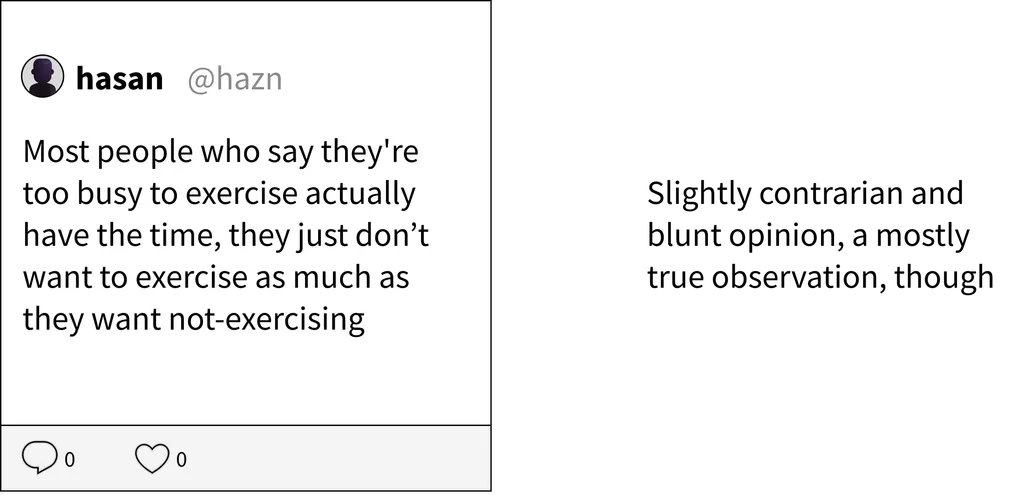
Istanbul notes
=================
Human resiliency fascinates me. Expats in Europe say the Turkish inflation is not too bad, Istanbul people say it's really bad. Every person I met worked more than 10 hours per day.
Merchants in the bazaars have gotten arrogant. Nobody is ready to be haggled down from the high prices. They used to cater to German tourists, but now the dynamic has changed to rolling out the carpet for Arab and Russian tourists.
While I was there, two big things happened: Türkiye was eliminated early in the World Cup, and there was a trans pride march. For both, I was surprised that no cab driver gave too many shits about it. Turkish cab drivers remain abnormally funny, though.
Previously, people would've flipped out over these topics. Everything seems a little gloomier now. People are more tired, less invested in the workings of the city. Mostly, Istanbul people just want new political leadership.
All in all, Istanbul remains an amazing place. Everything and everyone is worn down, but remains resilient.
----
Lawless
===========

Airports are lawless areas. Just slam your beers at 5 a.m., my friend, nobody bats an eye. Also go back to sleep on the floor in a spine-bending position after, we don't give a fuck.
Marathons have this property as well. I was shocked to see how people deal with liquids during marathons. Another area I remember is university amenities right before a heavy exam. It's not unusual to see people with a cigarette and coffee in hand who haven't slept in 30 hours.
There's something to be said about the mutual understanding of pain and suffering here, and how that enables deep empathy for queer behaviour. Is empathy the antidote to disgust? And therefore, is a well-travelled and well-experienced life the secret to tolerance?
Travellers would say yes, of course, but I am much more inclined to think that humans are only temporarily tolerant of anarchy. Everyone is too compromised to police anyone else in these lawless areas. Until takeoff, then back to bickering and collective complaining.
----
You will get the stupid version
=================================
I am an almost objectivist (the [aesthetic kind](https://en.wikipedia.org/wiki/Aesthetics#The_individual_arts)) when it comes to great art and ideas. What I mean by that is I believe great art is more likely to break through than bad art, and will likely endure longer. I am also an objectivist (the [Ayn Rand](https://en.wikipedia.org/wiki/Objectivism) kind) when it comes to the role of the artist: that the perseverance of the artist guides the perseverance of the art. And most of all, I believe great art is done in small groups, with small audiences.
I love following emerging subcultures on the internet, and I love following their development of an aesthetic and the ideas they rally around. Some of these ideas even get adopted by the mainstream, and inevitably lose nuance during the adoption. Aka the mainstream gets the stupid version of the idea. There are countless examples: effective altruism and charity, therapy and boundary culture, and the worst offender of them all, agile software development.
On one hand, it's depressing that the ideas we hear are usually a watered-down, stupid version. On the other hand, it's invigorating that maybe we can dig a little deeper, that mainstream ideas are deeply underrated because there's almost always a smarter insight, a greater artist behind it.
----
hazn's 6 (7) rules for young CS graduates
==========================
At 30 years old, I am saddened that I beat all of my computer science students when it comes to AI workflows.
On X (formerly known as twitter), much younger people beat me, and I am aroused and inspired by that.
The world of [computer science and math](https://www.youtube.com/watch?v=flRSWqq4OUI) got way more rough for young graduates.
Therefore, each lecture I start with a little speech about how doomed they are if they don't adopt AI as fast as they can.
Here are the 6 (7) rules I teach them to prosper in this age:
1. AI is better than you
2. Don't do everything with AI
3. Be ambitious
4. Keep it simple
5. There is content on everything
6. Most content is wrong
They are contradictory and self-referential by nature.
Here is the secret seventh rule:
7. Work hard
----
Bittersweet
=========
1. [Accepting that capitalism is truly compounding for human flourishing](/stubborn-attachments) means we have to accept that income disparity compounds too
2. Believing that humans can find meaning in an age of AI means accepting that intelligence and taste are not uniquely human features
3. Loving Uber and Waymo means I have to accept that my old dad, a classic cab driver, is outcompeted
I have a British lad in my head going "bit bittersweet, innit?" on all these things.
----
# roon on analytical thinking
humans are really not built for first principles analytical thinking. even smart people find it incredibly exhausting. what we consider analysis is usually anxious panicking and avoiding something or the other. it is clear we are going to be massively outclassed in this soon

AKA. "analytical thinking is the differentiator" is just as outdated as ["taste is the differentiator"](/please-stop-repeating-is-the-differentiator)
What I love about LLMs is that they do a bulk -> cut process of thinking naturally, they research and reason -- a lot -- and then cut down the logic chain. If I had the stamina, that'd be my modus operandi on every question.
Also, try out the best LLMs, people, pay for the 100 USD sub, they really are better.
first of all, what you say AI will never be able to do it can do right now if you'd pay for the subscription dumbass
----
Aesthetics of 2026
==================
In Q2 2026, you should either max out being a specialist or max out being a messy/composer/glue layer (see [messy jobs](https://www.siliconcontinent.com/p/why-desk-jobs-survive-and-amodei)).
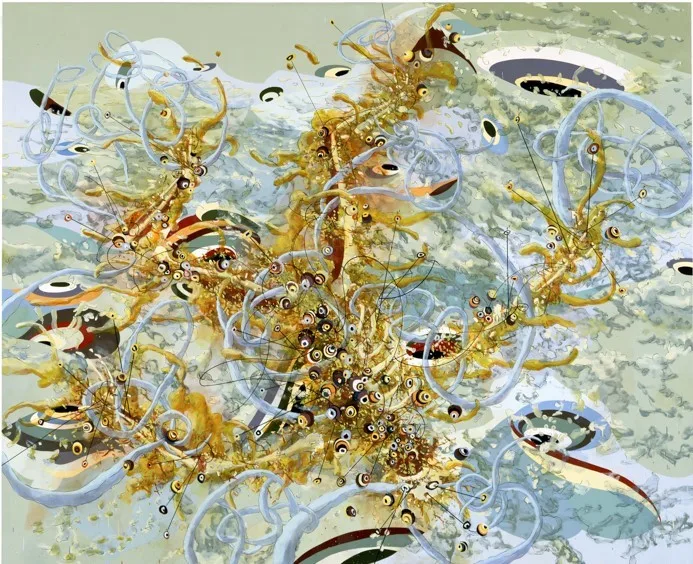
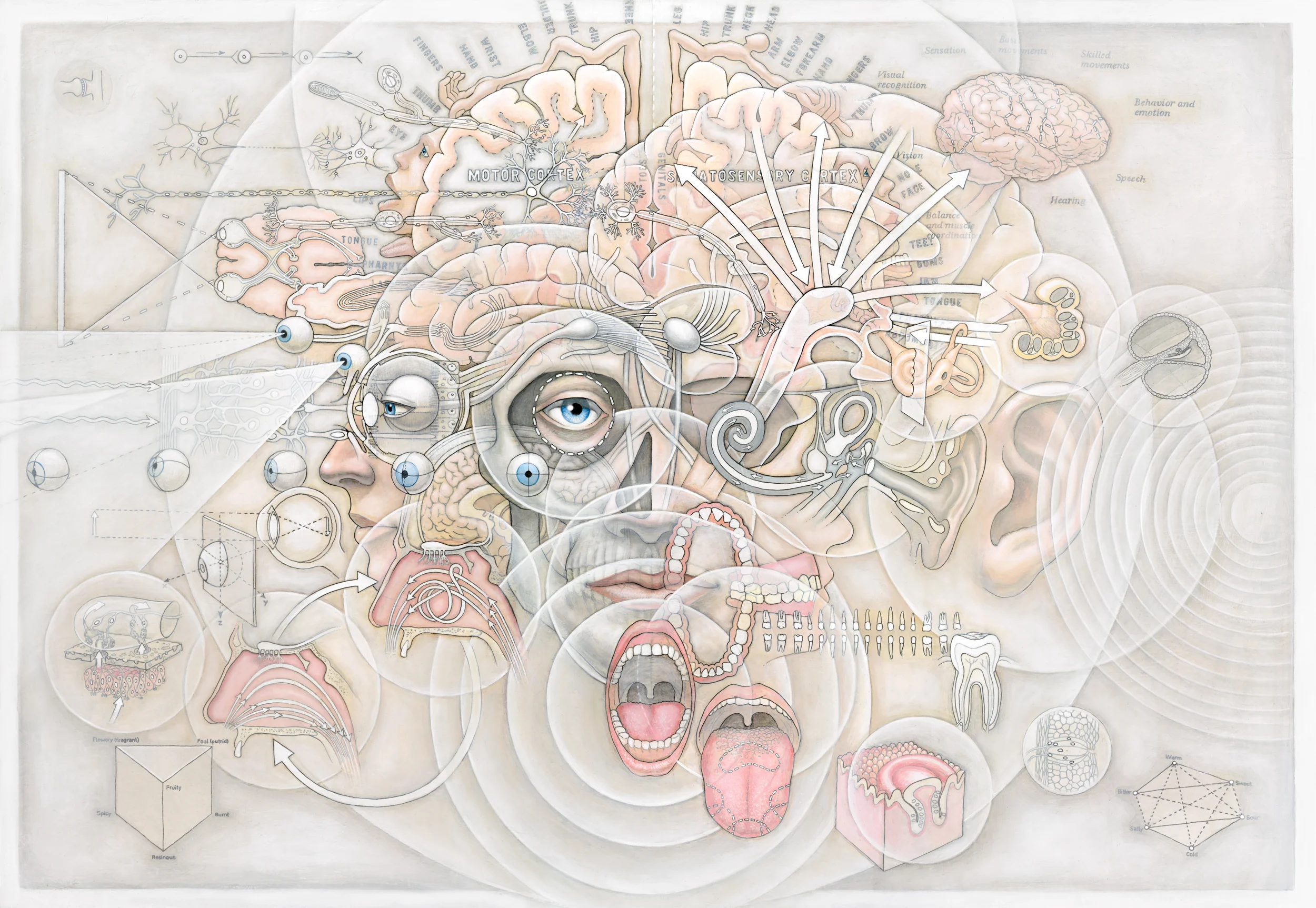
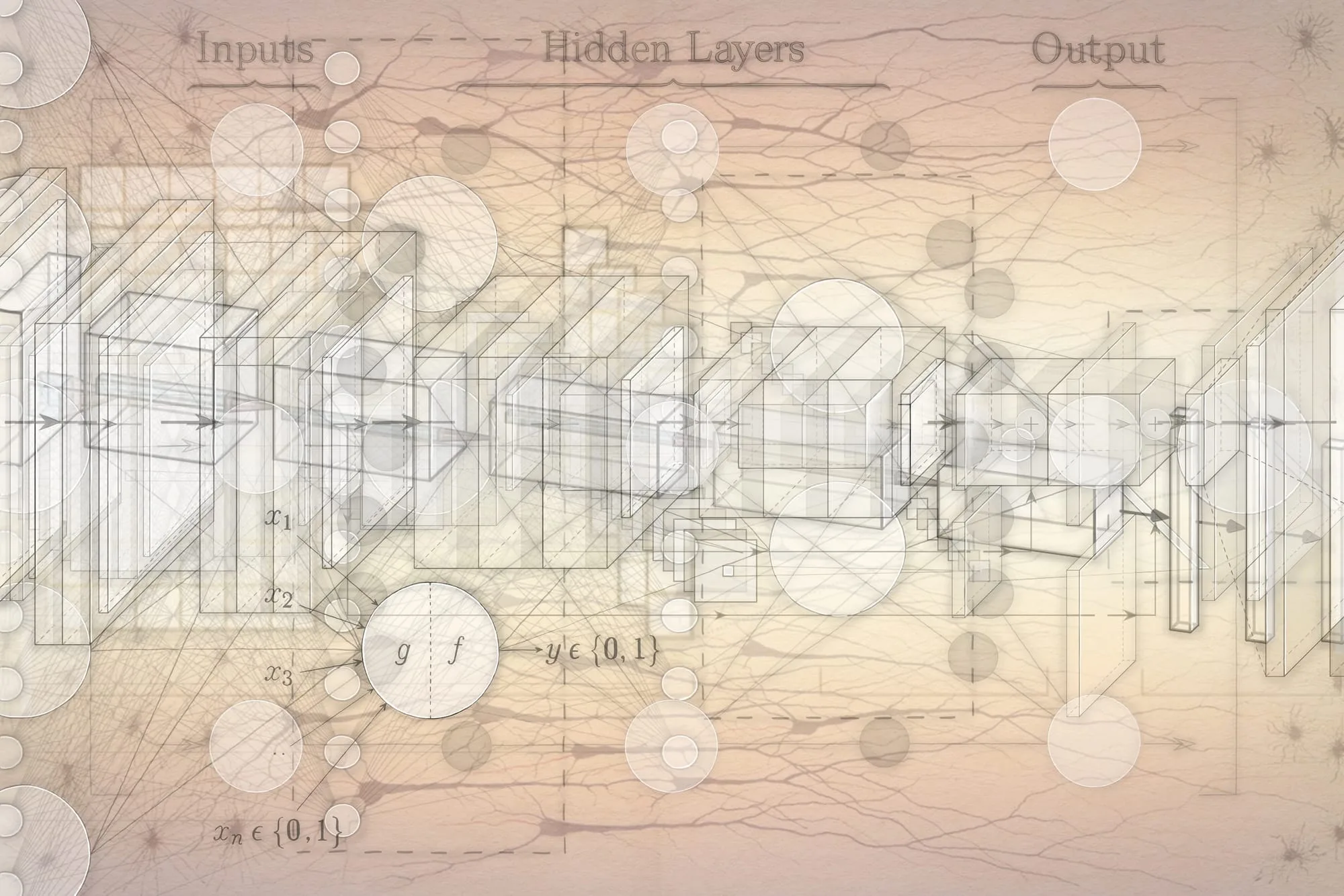
Here is some inspo for messymaxxing.
**Paul Laffoley**
**Matthew Ritchie**
**Casey Cripe**
----
What I've been reading - 2026-06-12
====================================
- [Without hope of resolution](): Simple and tidy article on emotional overthinking -- philosophy is plurality, living is context-dependent, reject [choosing between two ways to live](https://en.wikipedia.org/wiki/False_dilemma), everything is fine.
- [Might AI hurt corporate profits?](): AI makes searching for software solutions more efficient for customers, which benefits customers rather than sellers of software. Insurance is the mirror image: better prediction lets insurance sellers price risk more precisely, which *can* benefit the seller and not the customer. At the limit, perfectly accurate insurance stops pooling risk and becomes prepaying your own eventual costs. Maybe society benefits from some prediction error after all?
- [Speed matters: Why working quickly is more important than it seems](): Obvious but dangerously subtle points from the great `jsomers` on [speed](/performance-mantras).
- [Why I Don't Name Names On The Blog](): Relevant because I didn't name my favorite crackpot Gary Marcus in my [latest post](/retroactive-redemption-pattern), but heavily alluded to who I meant in the related links section, of course.
- [Tyler Cowen: Seven Ways to Avoid Losing Your Job to AI](): What I understood from this article is that you need messy jobs, where there is an in-person human component that can't just be captured by data. Everything you can do in a computer terminal is, by definition, captured by data. That's another principle of his: if you want to improve your productivity with AI, you need to be able to capture and provide relevant data.
- [Beyond Benchmarks: Disagreement Among Frontier LLMs on Real-World Fact-Checks](): The website made some wild claims (67% of real fact-checks, top AI models don't agree on the answer), but the website looked vibe-coded, so I dug deeper into the method: [LLMs weren't allowed to use external systems and the prompt was weird](https://news.ycombinator.com/item?id=48308177). Should be discarded, as with most statistics on LLMs and their usefulness.
----
The Retroactive Redemption Pattern
==================================
*They really thought they were cookin'*
Arguing against crackpots (and the fans they've gathered) is a losing battle, as losing is [overdetermined](https://news.ycombinator.com/item?id=13164794).
This post documents one reason why: The Retroactive Redemption Pattern.
## I
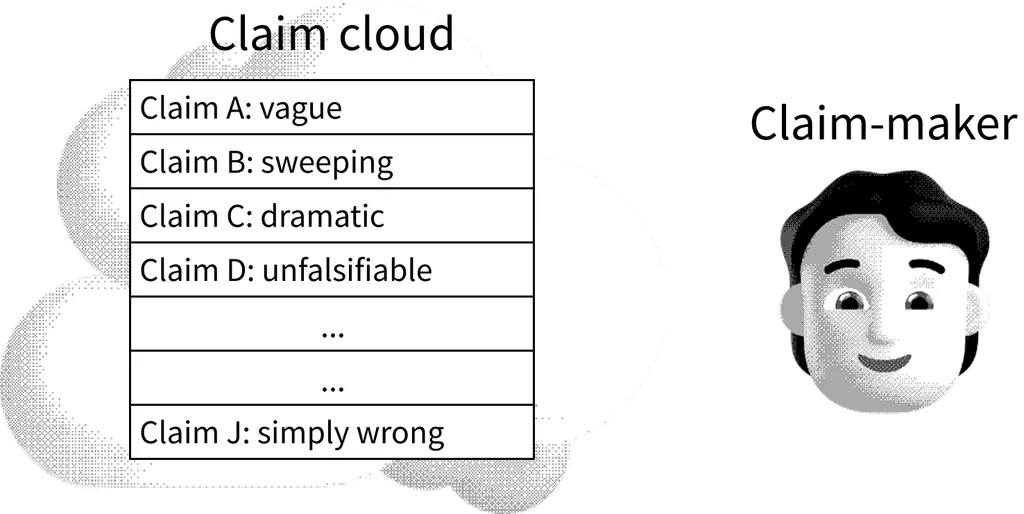
Any interesting and complex topic usually comes with a public person making a set of claims about it. We'll call that set the claim cloud:
To be taken seriously, not every claim in the claim cloud has to be true. Being directionally right is hard enough on its own.
But you see, the problem is this claim-maker is somewhat of a crackpot.
Not because of the validity of their claims, but because of how the claims and the claim-maker's relationship to them interact with the world.
Let me introduce the element of time to illustrate this interaction:
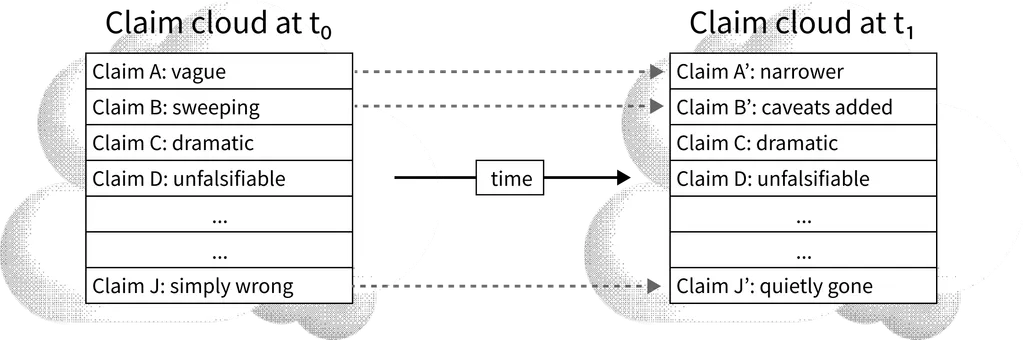
Over time, the original claims can become arguably more true, or arguably more wrong.
Claims rarely stay static, especially because there are subtle forces at play here: elasticity and ego.
The crackpot subtly or not so subtly makes changes to the original claims: they become narrower, wider, or more convoluted, depending on how the events in the real world pan out.
Therefore, through the claim-maker's ego and the elasticity of the wording, the claim cloud drifts from t0 to t1, toward whatever version looks most true in hindsight.
To be fair, one claim in the cloud may turn out prescient.
Most of the cloud was still misleading in its original form.
The pattern kicks in when that one true fragment gets used as retroactive redemption for the whole cloud.
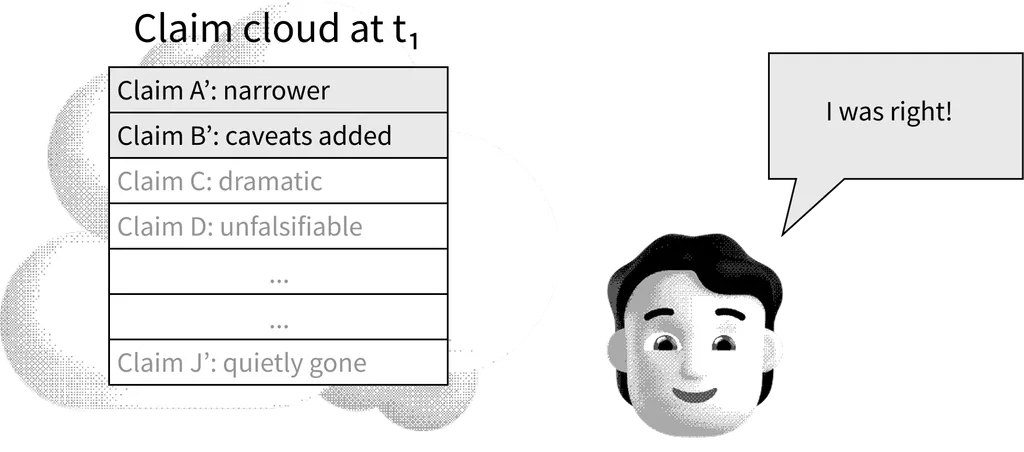
The original claim cloud evaporates and explodes at the same time.
The one correct claim launders a whole cloud of bullshit.
The cleanest example of this pattern is the retroactive redemption of anti-vaxxers.
Anti-vaxxers put out a whole cloud of claims: microchips in the shot with Bill Gates tracking you, armchair-expert biology like wild mRNA theories, and so on.
Then the big claim that vaccines were the devil's way of controlling your biology narrowed down to one defensible fragment: the shots could cause heart inflammation in young men.
That turned out to have a real basis: rare cases, mostly in young males, usually mild and self-resolving (and generally lower risk than the myocarditis you'd get from COVID itself).
Of course, now the anti-vaxxers ride the victory lap, as if they were right all along.
## II
Likely reasons the pattern exists:
- The obvious point: people don't only want to be right, they want to have been right all along.
- Status is involved as well. If the claim-maker is a public thought leader with fans, the audience starts defending the thought leader, not just the claim.
- The argument gets hotter, because admitting you were wrong now means admitting it to yourself, to your opponent, and to the people who liked you for being right.
- There's [research showing that we reconstruct our memories without noticing](http://www.self-definingmemories.com/bias_and_constructive_processes_in_a_self-memory_system.pdf): your current knowledge, beliefs, and feelings quietly reshape your memory of what you used to think and say.
- It's just easier to elaborate and convolute why you were right than to accept you were wrong.
- It's also why arguing rarely works: [persistent disagreement tends to run on self-favoring priors and self-deception](https://mason.gmu.edu/~rhanson/deceive.pdf), not a shared hunt for truth.
- Knowing something other people don't know is weirdly affirming for crackpots and conspiracy theorists alike.
## Related
- [The Exemption Outsourcing Pattern](/exemption-outsourcing)
- [All In All, Another Brick In The Motte](https://slatestarcodex.com/2014/11/03/all-in-all-another-brick-in-the-motte/)
- [Scott Alexander on Gary Marcus](https://www.astralcodexten.com/i/167709461/in-memoriam-your-last-set-of-goalposts-gone-but-not-forgotten)
- [Gwern on Gary Marcus](https://old.reddit.com/r/TheMotte/comments/v8yyv6/somewhat_contra_marcus_on_ai_scaling/ieixnwm/?context=2#thing_t1_ieixnwm)
- [roon on Gary Marcus](https://x.com/tszzl/status/2057680411317411883)
- [Gary Marcus on Gary Marcus](https://x.com/GaryMarcus)
----
# Performance mantras
Most advice on performance will only help you to get better incrementally. Here are some mantras I think are undervalued for true breakthroughs 🧘.
## Linear
```text
performance
^
|
| *
| *
| *
| *
| *
| *
| *
| *
| *
| *
*-------------------------------------------------------->
```
There are three ways to go faster linearly: doing less in the same time, doing the same in less time, or splitting the work across people.
Therefore, the obvious ways to increase performance are:
1. doing fewer things
2. doing each thing faster
3. splitting the thing across workers
Think of a cashier.
They can scan faster, or, seeing the same item six times, scan it once and key in a quantity of six.
Cashier scans faster = increased performance through doing the thing faster.
Cashier scans one item and enters quantity six = doing less work.
Now think of a classic team setting. If you are collaborating, do the blocking part first and send it out. They can work on their part while you work on something else. You split the work.
**Mantras**:
- do less
- do it faster
- do it in parallel
## Phase transition
```text
performance
^ *
| *
| *
| *
| *
| *
| *
| *
| *
| *
| *
| *
| *
| *
*-------------------------------------------------------->
```
The best way I can describe phase transition is "you become so good you gain a new capability".
Doing the thing so well that it opens up completely new levels of performance.
This is my favorite zone, if you are super skilled you can get away with so MUCH.
As a personal example, I trust myself to come up with interesting talking and teaching points in real time, so I can prepare little for lectures I give, cutting my preparation time non-linearly.
But my favorite example comes from sports: when an offensive player in football is devilishly fast, they gain the capability of outrunning the defense.
Once that threshold is passed and that capability is gained, the player scores much more.
There's also a slightly more system-y example.
As alluded to in my [bureaucracy post](/bureaucracy-and-envy), there's a narrow time window where you can act upon unbureaucratized opportunities, so if you are fast, you don't have to go through bullshit process.
In network science you would call this passing of the threshold a [phase transition](https://en.wikipedia.org/wiki/Evolution_of_a_random_network#Examples_for_occurrences_in_nature), hence the name.
**Mantras**:
- do it so well it feels unfair
- do it at the exact right time
## Exponential
```text
performance
^
|
| ⠀⠀⠀⠀⠀⢀⣀⣀⣀
| ⠀⠀⠀⠰⡿⠿⠛⠛⠻⠿⣷
| ⠀⠀⠀ ⠀⠀⠀⣀⣄⡀⠀⠀⠀⠀⢀⣀⣀⣤⣄⣀⡀
| ⠀⠀⠀⠀ ⠀⢸⣿⣿⣷⠀⠀⠀⠀⠛⠛⣿⣿⣿⡛⠿⠷
| ⠀⠀⠀ ⠀⠀⠘⠿⠿⠋⠀⠀⠀⠀⠀⠀⣿⣿⣿⠇
| ⠀⠀⠀⠀ ⠀⠀⠀⠀⠀⠀⠀⠀⠀⠀⠀⠈⠉⠁
|
| ⠀⠀⠀⠀⣿⣷⣄⠀⢶⣶⣷⣶⣶⣤⣀
| ⠀⠀⠀⠀⣿⣿⣿⠀⠀⠀⠀⠀⠈⠙⠻⠗
| ⠀⠀ ⠀⣰⣿⣿⣿⠀⠀⠀⠀⢀⣀⣠⣤⣴⣶⡄
| ⠀⣠⣾⣿⣿⣿⣥⣶⣶⣿⣿⣿⣿⣿⠿⠿⠛⠃
| ⢰⣿⣿⣿⣿⣿⣿⣿⣿⣿⣿⣿⡄
| ⢸⣿⣿⣿⣿⣿⣿⣿⣿⣿⣿⣿⡁
| ⠈⢿⣿⣿⣿⣿⣿⣿⣿⣿⣿⣿⠁
| ⠀ ⠀⠛⢿⣿⣿⣿⣿⣿⣿⡿⠟
| ⠀⠀⠀ ⠀⠀⠉⠉⠉
|
*-------------------------------------------------------->
```
Here the diagrams break down, because you stop asking how to solve the problem faster.
It's trivial to graph exponential curves, but they'd miss the point.
You get exponential gains by changing the thing instead of trying to speed up things.
Question the problem at hand, why this thing is in this shape, and why this work needs to happen at all, and if it shouldn't all be scratched and rethought.
Hard to talk about it, but psychologically you can achieve this by [raising your ambition](https://marginalrevolution.com/marginalrevolution/2018/10/high-return-activity-raising-others-aspirations.html), using [different time and task management systems](https://www.kalzumeus.com/2010/03/20/running-a-software-business-on-5-hours-a-week), and [being willing to throw away](/three-things-i-believe) old things/thoughts of yours.
Be [meta-rational](https://tim.blog/2020/05/09/tyler-cowen-transcript/#:~:text=Could%20you%20elaborate%20on%20meta-rationality%20please): work on different problems, delegate the rest, and get comfortable not doing things.
My exponential gain was quitting video games and that is the boring half of the story. The real move was the leftover energy: I pointed the same restless, nervous, slightly deranged ADHD engine at talking to AIs (plural) all day instead (with the explicit goal of producing an artifact at the end of the day, every day).
Same horsepower, new direction.
**Mantra**:
- do something else
----
Three things I believe
============================
strongly:
- You don't have to justify why it's ethical to consume, *if* you won't be changing your shopping habits anyway, same-day deliver stuff to your house guilt free.
- We can get better at everything at once, we can be healthier, happier, wealthier, more spiritual -- there's no reason to take it one by one, reality is compounding.
- Related: accept the inevitable crashdown of your personality, optimize your recovery time, and you'll come out stronger.
----
# Repeating the phrase "taste is the differentiator" will not benefit you
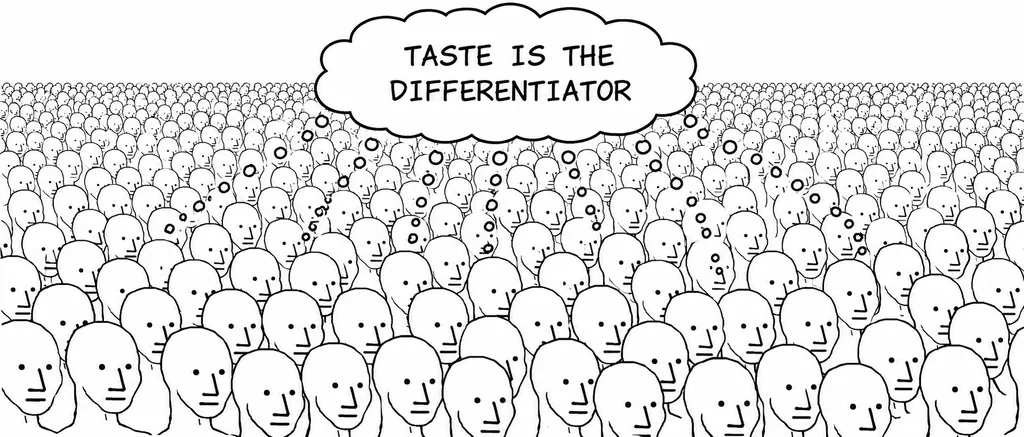
AI has a new fool's trap each year.
In 2022, the critique was that it was just a glorified autocomplete.
In 2023, that it hallucinated too much.
In 2024 and 2025, that LLMs weren't truly intelligent, just stochastic parrots.
This year, the year of the Lord 2026, the fool's trap is: "AI lacks human judgment, taste is the differentiator".
Don't buy into this year's fool's trap. As Nadia Asparouhova wrote in [The tyranny of ideas](https://nadia.xyz/ideas), "Ideas ride us into battle like warhorses." The people who repeated the previous critiques were tyrannized by their ideas of incompetent AI and rode to war with a foolish strategy.
In hindsight, it was cope. Some criticism was warranted, but it was cope nonetheless. Cope against accepting the ruthlessly inevitable forward march of this transformative technology.
As Tyler Cowen says, [solve for the equilibrium](https://marginalrevolution.com/?s=Solve+for+the+equilibrium)! Don't drag this year's cope into your thinking.
Even the most profound truth too cheaply repeated is LinkedIn-level insight.
The better question is: where does AI have better taste than me? Which areas should I completely delegate to AI, so far as to accept everything the AI does in those areas, even when it overrules my taste?
----
Just stop using these
==================================================
phrases that never achieve anything, ever
- `if everybody would just`: "If your solution to some problem relies on `If everyone would just…` then you do not have a solution. Everyone is not going to just. At not time in the history of the universe has everyone just, and they’re not going to start now."^[squareallworthy on Tumblr.]

- `can't you just`: Belittling, either shows you disrespect the person or disrespect the problem they are dealing with, replace it with "is ... possible?" or 100 other phrases
- `i just find it funny`: The passive aggressive classic, I just find it funny how everyone hates hearing this phrase, but loves repeating it
Yes, you probably got it, these are all unjustified usages of `just`.
----
On snobbery
==============
I'm a MacBook snob, I have declined attractive job offers because they only allowed Windows machines for work.
That admitted, I am **very** afraid and cautious about becoming a snob in other arenas.
When it comes to coffee, I can enjoy third-wave, we-paid-5k-for-the-coffee-machine-and-grinder-each coffee, and I can also enjoy microwaved water infused with cheapo instant coffee.
Same with music: I lovingly bop my head to the most mind-blowing live concert setups, then bop just as happily to a 360p YouTube recording of the same concert.
Arguably, I enjoy coffee and music more than the coffee and audio snobs do.
Or more precisely, I have a wider range: snobs have fenced themselves into enjoying only the *crème de la crème*.
*instant coffee fukn slaps.*
----
# roon on historic times
the thing about living through history is, they don’t prepare you for how cringe it’ll all be
----
Smoking is ass-backwards meditation
========================================

You take a hit, you focus on your breath, you let your mind run, the coffee tastes better, the cigarette burns up your throat in just the perfect way.
With a heavy heart, I have to say, that the practice of smoking is close to the practice of mindfulness.
While the in-the-moment peak of smoking can reach unbelievable highs, especially combined with liquids, there's a hole left in you once the cigarette is done.
The craving for the next cigarette only increases.
The wheel of samsara keeps spinning.
During the act, smoking and meditation have similar mechanics.
In the long term though, smoking is destructive, while meditation is deconstructive.
Smoking is ass-backwards meditation.
----
Office zazen
============
Zen's minimalist aesthetic is timeless.
Just the word itself is perfect, and everything surrounding the zen cosmos, like zen gardens and zazen posture, has this beautiful, all-encompassing void, black and white feel to it.
Just look at this diagram, ay:

You know I love [looking at a dot](/timeboxd) on my laptop screen. And you know I love [making seemingly boring habits](/oatmeal) [of mine fun](/getting-used-to-it) and [spiritual](/one-step-at-a-time).
I couldn't help myself to make even the staring-at-dot work habit of mine spiritual. During dotting, I try to think of nothing, or as [Sasha Chapin puts it](https://sashachapin.substack.com/p/practice-nothing-the-most-profound), practice nothing. And, through no effort of my own, I envision a [frog zen monk with a stick behind me](https://youtu.be/0h0dpFTxEKE?si=EHoVYt9nOQmNDADk&t=174) correcting my posture while I stare at dot.

----
Jensen on loser mindset
=======================
> The premise that even if we competed in China, that we’re going to lose that market anyways… You’re not talking to somebody who woke up a loser. That loser attitude, that loser premise makes no sense to me.
~ Jensen Huang, [Dwarkesh Podcast](https://www.dwarkesh.com/p/jensen-huang)
Genuinely the most energized I felt in weeks hearing this.
I adore the argumentation rhetoric of the rationality community and Western liberalism proper.
Although sometimes the argumentation gets too technical, winning the clever small points while missing the big one.
And sometimes it's just too long.
Back in my childhood, in the gutters, you could just end arguments by telling people to grow up.
Actually, we didn't say "grow up", we said "man up".
It's stupid, but sometimes I wish I could go back to telling people to man up, to compete, and to [stop whining](/deathbed-regret). A return to tradition, if you will.
----
Cold hearts on heated floors
===============================

*Or: What do you do, spiritually, with a psychopath roommate?*
Our culture assumes people can change.
Be it therapy, moral appeals, punishment, we believe in personal growth and development.
Psychopaths break every assumption and belief, we have no protocol for them.
Living with a dysfunctional roommate hurt me spiritually.
I fished ungodly nasty stuff out of the kitchen sink regularly, had to clean on both weekend days to have some resemblance of an intact apartment.
The one time a small piece of furniture broke off when I sat, I heard about it every single day.
No matter how much warmth and patience I provided, I was forever the perpetrator and she was forever the victim.
No matter what I said, my own admitted character mistakes were the only relevant talking point.
Arguing was wasted time, and that's what hurt me most.
Was I not tactful, not wise enough?
Before talking to her, I meditated for half an hour.
Or are some souls truly unredeemable?
I couldn't look into her eyes anymore, I saw how her lies became her truth, how she rewrote reality.
> And when it is said to them, 'Do not cause corruption on the earth,' they say, 'We are but reformers.' Unquestionably, it is they who are the corrupters, but they perceive not. And when it is said to them, 'Believe as the people have believed,' they say, 'Should we believe as the foolish have believed?' Unquestionably, it is they who are the foolish, but they know not.
~ Surah Al-Baqarah
On a society level, I don't know what to do with psychopaths.
Some hearts are sealed.
Not clouded, not in need of more warmth.
Sealed.
> God has set a seal upon their hearts and upon their hearing, and over their vision is a veil.
~ Surah Al-Baqarah
On a personal level, I now learned what to do with sealed people.
Almost always, my answer is reciprocation, with physical and spiritual grace.
In cases like her, the only smart move is not to play.
Move out.
Close your mind.
Seal your heart to them, like theirs is sealed.
Some souls are unredeemable by you.
There is no advice, no words, no key you will find.
> Whenever you leave what hurts you, the gain has immediately begun
~ Turkish proverb
----
One step at a time
==================

I just ran a marathon without real training.
Finished 5 minutes under the disqualification limit (5:30:00), but that was exactly my goal 🙃.
My whole body hurt, but I genuinely had a great time.
Friends and even random spectators commented on how good and happy I looked.
Some thoughts I had during the race:
- Endurance is scarce
- Each step is one step closer to finishing the [bucket list](/40#:~:text=Run%20one%20marathon%20every%20year)
- Gratefulness will make you/life run better
- I don't know if I have a higher pain tolerance, or if I just feel less pain to begin with when compared to other people^[My hunch is both. When I carry a cup that's burning my hands, I don't scream, I slowly put it down and then say "ow, that was hot." My dentist was always so happy he didn't have to use anesthesia on me, even when doing tricky and deep surgeries on my teeth.]
- [Always be movin'](/always-be-moving) theory is real, folks
Sub 4 is the goal for next year!
> Feet don't fail me now, take me to the finish line
>
> Oh, my heart, it breaks every step that I take
>
> But I'm hoping at the gates, they'll tell me that you're mine
>
> Walking through the city streets, is it by mistake or design?
~ Lana Del Rey
----
Jane Austen
===========
> To be fond of dancing was a certain step towards falling in love
~ Jane Austen, Pride and Prejudice
----
The always-be-moving-forward trick for getting out of bed and getting good grades
====================================================
My trick for getting out of the bed is to keep moving. One leg out of the blanket, then one arm, then the other leg. And so on. You will be out of the bed before you know it. Same trick works for studying super boring topics at university. Sit down, start making progress. Don't evaluate if you feel like it.
The subtle part: just like in soccer penalties^["a player stops in his run-up, it is an offence for which he shall be cautioned"], you never stop moving. No matter how slow, you keep going.
This is related to the [no days off](/no-days-off) principle. If something feels expensive to do, you will do it less. That's [demand and utilization](https://en.wikipedia.org/wiki/Law_of_demand). Make it cheap, and it can even be fun if you [talk yourself into it](/getting-used-to-it).
Also, put the phone far away from you.
----
On intelligence
===============
**Knowledge** is knowing your discarded toenails contain keratin, which in turn, contains nitrogen. And that your living room plants need nitrogen.
**Wisdom** is not putting your toenails in the plant pot.
**Intelligence** is making the leap from knowledge to wisdom. Or rather, it's having the sensibility to put the toenails there, but having the wisdom to bury them deep in the pot, so people don't see what you did. And intelligence is still not doing this in front of your friends, or talk about this in front of your friends. Maybe intelligence is hard-to-define, but it for sure entails the skill **to not talk** about this publicly. "Intelligence is what AI is not able to do," they say ... but even AI will tell you to not talk about your toenails in your plant pot, so ... on a second thought, if you have hippie friends they might see what you do as resourceful, and it might be genuinely status increasing and inspiring that you put your toenails into plant pots. Ah well, this isn't the neat conclusion I wanted to reach. Probably intelligence is heavily context dependent, and path dependent. And dependent on if you actually put your toenails into that pot or not, and if you behaved wisely while doing it. **I guess intelligence is more of a verb?**
----
Bucket list: 40 for 40
======================

Two months until thirty. Ten years until forty. Forty things I want to experience in between:
1. Hold a talk or an event at the Colosseum
2. Win a BJJ match
3. Attend a Sufi dhikr ceremony
4. Play an official soccer match again
5. Live in California again, specifically the bay area
6. Attend a jhana retreat
7. Learn how to sharpen knives properly
8. Be in the best shape of my life (the leanest or the most effective I have ever been)
9. Host at a technical conference
10. Learn a Latin language
11. Have someone come up to me and tell me something I wrote or said inspired them
12. Learn Arabic, read books from the golden age of Islam
13. Hold Swiss, German, and Turkish passports
14. Have equity in something, acquire land
15. Be married
16. Have kids
17. Leave something that gave me enormous success because the marginal loss was greater
18. Achieve enlightenment/fana, only the beginning
19. Maintain a narrated chronicle of my life, week by week, marking what happened
20. Complete a multi-day water fast
21. Record my parents telling their life story
22. Do improv at an open mic session
23. Run one marathon every year
24. Build a network where any two phone calls can solve almost any problem
25. Write my dad a letter in Turkish that makes him cry
26. Go a full year without missing a single day of publishing
27. Try transcranial ultrasound neuromodulation
28. Go back to Dortmund and give a talk or workshop for kids there
29. Start doing videos
30. Visit Korea, China, Tibet, Nepal
31. Learn my mom's recipes
32. Do a major contribution to a technical project I love
33. Have a real, extended conversation with someone whose watcher also never sleeps
34. Fund someone else's dream with no strings attached
35. Keep a powerful secret and never leverage it
36. Learn three chords and write one song and record yourself singing it
37. Reclaim something abandoned (a neighborhood, a company, a tradition, an idea) and make it alive again, and make it outlive you
38. Build an artifact that is simultaneously machine, art, and prayer
39. Learn [dancing on a longboard](https://www.youtube.com/watch?v=ynakjV77kZk)
40. Increase liberty and happiness in the world
See ya in 10 years.
----
ruminous fee
============
```
i have tried prudent planning long enough
from now on
insane
far away from home
once a city;
i turned into ruin
though
my essence flourished
by paying this ruinous fee
```
----
The underrated benefits of always having oatmeal at lunch
==========================================================

For me, eating oatmeal at lunch every day is almost a spiritual experience.
Let me give you my rundown:
- it's healthy and cheap
- it's a great and efficient routine, one decision less each day
- counterintuitively, it enables a wide variety of tastes
**Healthy and cheap**
Healthy, cheap and vegan. You can enrich it with bananas or goji berries for extra nutrients. You can use oat milk or other fluids that are enriched with stuff you might be lacking, like vitamin D and calcium.
**Great and efficient routine**
You have more time in the lunch break to do whatever. You can legitimately get down the ratio you like better each time you make it. If you skip breakfast, you are craving food by lunchtime^[Admittedly, this is because of fasting, but if you break your fast later in the day you love the food even more. Ancient wisdom.].
Tribal creatures we are, there is always an undercurrent of "what will my work colleagues think about this?" Doing it anyway builds genuine self-confidence. I also think it's secretly [high status](https://sashachapin.substack.com/p/the-moat-of-low-status-68a): you open the door for your work mates to do similar weird shit at lunch.
It doesn't even mean you eat worse overall. My work colleagues might doubt this, but I cook really nice dinners. Oatmeal at noon is what enables that, in a kabbalistic way I can't describe.
**Variety**
I'll try to describe the exoteric side anyway: if you constrain your life in one area, it opens up a lot of options in another area. If you constrain your sleeping and wake-up time, that's the only real way to have a routine where you write each morning, or exercise each morning, or do whatever each morning. Variety comes from constraint.
You can min-max your oatmeal with whatever nutrition (and taste) you need, and can even do [morphological analysis](https://en.wikipedia.org/wiki/Morphological_analysis_(problem-solving)) on your combinations:
| Fluid |
Base oats |
Topping 1 (fruit) |
Topping 2 (seeds/nuts) |
Topping 3 (extra) |
| Oat milk | Rolled oats | Blueberries | Chia seeds | Goji berries |
| Water | Instant oats | Banana | Flaxseed | Honey |
| Soy milk | Steel cut oats | Apple | Walnuts | Cinnamon |
| Coconut milk | Overnight oats | Mango | Almonds | Cocoa powder |
| Almond milk | | Raspberries | Pumpkin seeds | Peanut butter |
| | Strawberries | Hemp seeds | Protein powder |
I swear, I genuinely feel people are missing out on the greatness of oatmeal at lunch.
> The easiest way for us to gain happiness is to learn how to want the things we already have
~ William Irvine
----
How does your country pronounce "Wi-Fi"?
========================================

> International flights, connect me to the Wi-Fi
>
> The only way you reach me, huh
~ Pusha T
----
The Ozempic theory of societal change
========================================
*[Ozempic](https://en.wikipedia.org/wiki/Semaglutide) is the moment society stops pretending that discipline alone should govern the body.*
If you take steroids you're a loser — that's the mood. It's *almost* similar with Ozempic today^[This is in the Western European context, where the puritan disgust around body interventions runs deep], but the mood is shifting.
From what we know, Ozempic is safe^[There are behavioral changes people discuss as downsides, I don't want to downplay them too much, but from what we know, Ozempic is the real deal], and people love it because of the upsides: improved health, looks.
Downstream from that, confidence.
Healthier, happier people lead to a healthier, happier society.
It follows that Ozempic won't just make us healthier, it will change how we as a society think about external interventions into our bodies.
I argue this shift will also lead to us becoming spiritually healthier, with the help of external devices.
There's a growing literature on [transcranial ultrasound neuromodulation](https://sarahconstantin.substack.com/p/ultrasound-neuromodulation), a noninvasive way to reach deep [equanimity](https://en.wikipedia.org/wiki/Equanimity).
You point ultrasound at specific brain regions, modulating neural activity toward equanimity, all without surgery.
It's a hot topic, soon you'll hear all about these devices in societal discourse.
If you react with puritan disgust (why would anyone *want* help to meditate, this is backwards from its purpose), start observing how the mood around Ozempic changes in your society.
Being overweight has huge effects on people's lives, and by extension, society.
Not being equanimous does too.
You can almost run down the entire list of [seven deadly sins](https://en.wikipedia.org/wiki/Seven_deadly_sins): anger, envy, greed, pride — all failures of equanimity.
Within ten years, the idea that mental states must only be achieved through discipline will look as outdated as the idea that bodily weight loss should only come from discipline.
Ozempic is just the first domino. I actually don't know which intervention comes next, but they're coming.
All I know is that Ozempic's success makes society change its mind.
----
Nasreddin on the Djinn of Algebra
=================================
A young man rushed to Nasreddin Hodja's house, breathless and wide-eyed.
"Hodja, I have seen something extraordinary. A new kind of intelligence is coming into the world. Not from scholars, not from books, but conjured from algebra. This intelligence will be everywhere. Nothing will ever be the same."
Nasreddin nodded slowly and sipped his chai.
"But Hodja, my friends won't listen! I try to warn them, I try to explain, but they laugh at me. They don't believe it. How do I make them understand?"
Nasreddin set down his cup.
"You say this thing will soon be everywhere?"
"Yes! Abundant. Unlimited. Like water from a spring."
"Let me understand this," said Nasreddin. "You say a great intelligence is spawning, almost like a djinn?"
"Greater than anything."
"And yet you, a capable human, who has seen this, cannot convince a single friend?"
The young man blinked.
"Then you both are not so intelligent," said Nasreddin, "or you are possessed by this. If this thing is truly as clever as you say, why doesn't it do the convincing?"
----
No days off
===========
In the theme of 2026 and new habits, here's what worked for me: the no days off principle^[I am not sure if this principle applies to food, though. I still have one cheat day a week. This principle for habits that are an activity, not abstinence, at least in my experience.].
Let's say you want a good sleep rhythm, start exercising for reals this time, write more, etc.
When dreaming up these habits, you automatically visualize the gold standard: the perfect 8-hour sleep, the unbelievably energizing exercise, the writing of exactly one hour in the morning, getting one article done per day.
Ah, beautiful.
The flip side is that if you don't achieve this dreamed up scenario, you feel bad and lose the habit.
Also, because you have such a high expectation of the habit, you're less likely to start.
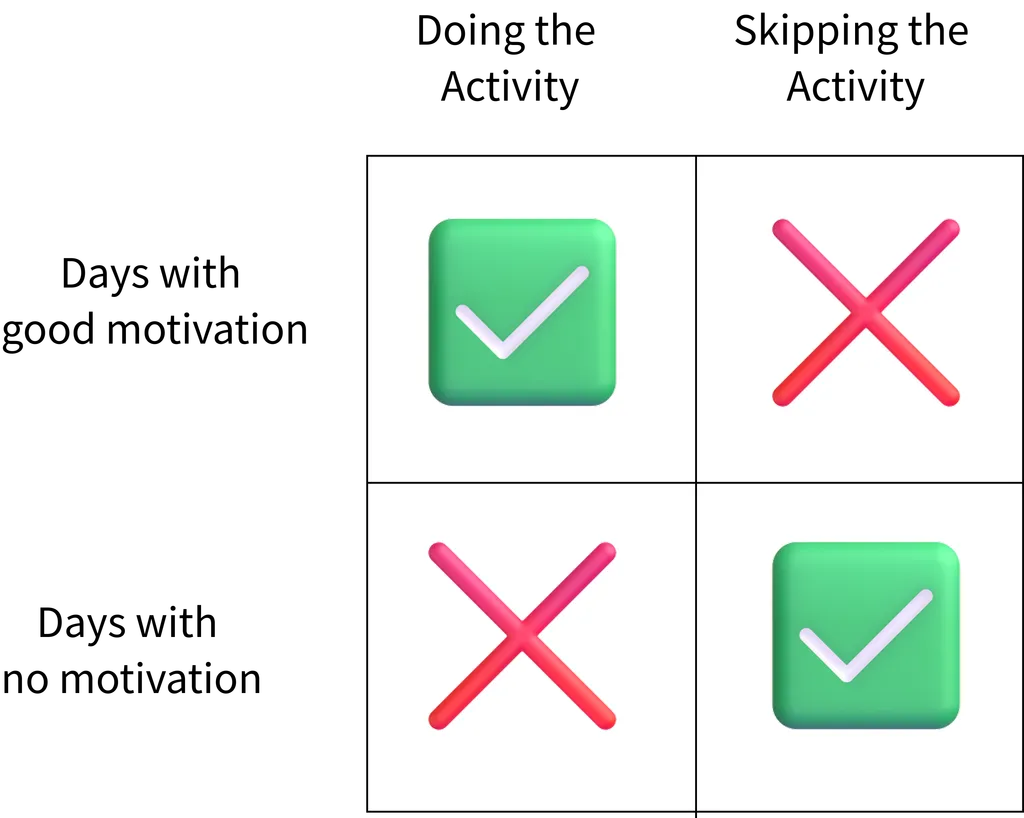
So in reality, the daily [decision matrix](https://en.wikipedia.org/wiki/Decision_matrix) looks like this:
Skipping an activity you swore to do is such a normal thing that I don't think I need to further explain the matrix and its implications.
Some days, you skip the habit because of low motivation.
There's a better way to frame the problem, in which *skipping* the habit is the ultimate enemy.
This is the framing of the no days off principle — do a little even on days with no motivation.
Here is the decision matrix with the new framing:
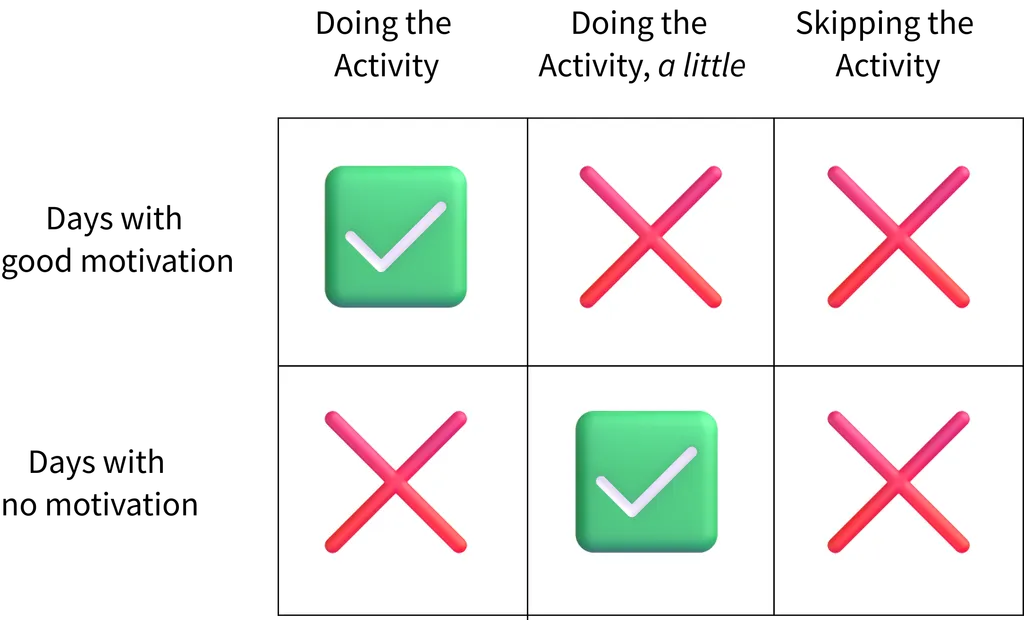
Let's reframe the good sleep habit we want to achieve with this new matrix.
The first insight is the trick of having good sleep is not really waking up early, but going to sleep early.
But life happens, throughout the year you won't always control when you sleep.
You can, however, always wake up at 7am.
So let's reframe the habit to "Wake up at 7am each day".
Of course, of course, getting 7-8 hours of sleep is the gold standard.
But! Internalize that the gold standard isn't always possible, and skipping the habit is *the enemy*.
So wake up at 7am, even if it means less sleep.
In fact, we know that being [regular in your sleep cycles might be more important than getting the perfect amount of sleep each night](https://www.sciencedirect.com/science/article/abs/pii/S2352721823001663).
Reframing the other habits: exercise (a little) each day, write (a little) each day.
That way you stay in motion, you beat the enemy.
If you haven't done exercise, just go out and do a little — just do some pushups, man, if you really have no time.
You will notice that you will exercise more regularly, and once you started with just a few pushups, you'll likely do more.
Instead of defining your habit goals as "exercise more" or "lose x amount of weight", rather write them as doing something every day, and never stop.
You also compound if you do it every day, and long-term, a little gain beats a loss.
No excuses!
----
On online psychopaths
======================
*Why giving good universal advice can be bad* or *I wish I could pre-filter psychopaths*
In person, I tune advice to whoever I'm talking to, as advice is context-dependent.
On the internet, advice I give is more universal and boring, as [context is scarce](https://infovores.substack.com/p/context-is-that-which-is-scarce).
And even the universal, boring advice has exceptions.
"Just talk up people on the street" is a potentially life-changing activity, unless you're socially awkward and/or considered creepy-looking.
If you are unable to walk, "Take a long walk to clear your head" is useless.
The above examples are mostly harmless offenses, though.
There's a worse category: advice that becomes dangerous in the wrong hands — a.k.a. psychopaths.
"Look up which conferences someone attends and show up, people love to hear you came for them" is good networking advice.
"Be persistent about meeting them, sending multiple follow-ups if you must, it usually works for me" is great communication advice.
Both tips become stalking instructions for a psychopath.
This is a genuine problem.
I've heard podcasters say they never discuss stalkers on air.
Psychopaths are mimetic—talking about psychopathic acts motivates them.
So adding "unless you're a psychopath" to advice doesn't help.
Even worse, it invites the psychopath.
So you're left with two options: don't give advice, or give it knowing the wrong person might take it to heart.
**Related**
- [The Exemption Outsourcing Pattern](/exemption-outsourcing)
- From [Ruminating on read receipts](/read-receipts): "Except in psychopath ex or dysfunctional family circumstances, I believe turning off read receipts does a person more harm than good."
- [Death Grips - Giving Bad People Good Ideas](https://www.youtube.com/watch?v=uvxkEvM81tU)
----
# Two tweets for twenty-sixteen

If I'm leaving 2025 with any core reflection, it's that I increasingly believe that the world has no place for those who lack conviction, that mistakes are forgiven while tameness is ignored, that perfection loses to done every time, that commitment and tenacity and audacity and self-promotion and risk-taking compound more than anything, and that all of this always starts with one very achievable next step that looks like a cliff but is much closer to the ground than you realize.
quit brainrot. unfollow trolls. read essays. go down rabbit holes. have a calendar. maintain a todo list. read old books. watch old movies. turn on dnd. walk with intent. eat without youtube. chew more. train without music. plan for 15 mins. execute. organise your desk. take something seriously. read ancient scripts. act fast. find bread. eat clean. journal. save a life. learn to code. read poetry. create art. stay composed. refine your speech. optimise for efficiency. act sincere. help people. be kind. stop doing things that waste your time. follow your intuition. craft reputation. learn persuasion. systemise your day (or don't). write. write. write. write more. iterate violently. leave your phone at home. walk to the grocery store. talk to strangers. feed the dogs. visit bookstores. look for 1800s novels. experience art. then love. sit with a monk and offer them lunch. don't talk shit about people. embody virtue. sit alone. do something with your life. what do you want to create? turn off your mind. play. play a sport. combat sports. notice fonts in trees. fall in love. notice patterns on a table. visualise it. talk to people with respect. don't hate. be loving. be real. become yourself. cherrypick your qualities. discard the useless. rejections aren't permanent. invite what aligns. accept what does not. read great people. be different. choose different. do great work. let it consume you. lose your mind. value your time. experience life.
----
All my criticism applies to myself, also
========================================
I don't want to come across as negative, though I know some posts might read that way.
Here's what happens when I ruminate: I notice patterns in myself and others, try to figure out what's going on, then post about it.
Any criticism applies to me first.
I am a victim of the [Exemption Outsourcing Pattern](/exemption-outsourcing), I tend to [overcomplicate things](/simple), I like [complaining about complainers](/exemption-outsourcing).
I want my posts to read as optimistic, that noticing and learning is powerful, that I can be self-aware enough to change my behavior, and thus change the world.
Just like "Make America Great Again" can be read as both pessimistic and optimistic, any criticism holds both challenge and invitation.
----
# The Exemption Outsourcing Pattern
Two observations about how people interact with differing opinions they encounter:
- it's easy to mistake someone else's opinion for an attack on identity
- people rarely agree with things that feel like an attack on their identity
Pick a subject, nearly any subject, and there will be people flipping out about differing opinions.
Nothing new here, no need to elaborate.
What I find interesting is one subtle way this plays out online.
A subtle enough pattern that it's worth talking about.
Let me illustrate the pattern with an example, starting with a person posting their opinion/observation online:
When people encounter something like this, a fork happens: some get offended, some don't.
Most non-offended people agree with the opinion or simply scroll past.
It's the offended people who are more likely to engage with the post.
The offended can be split into two groups again:
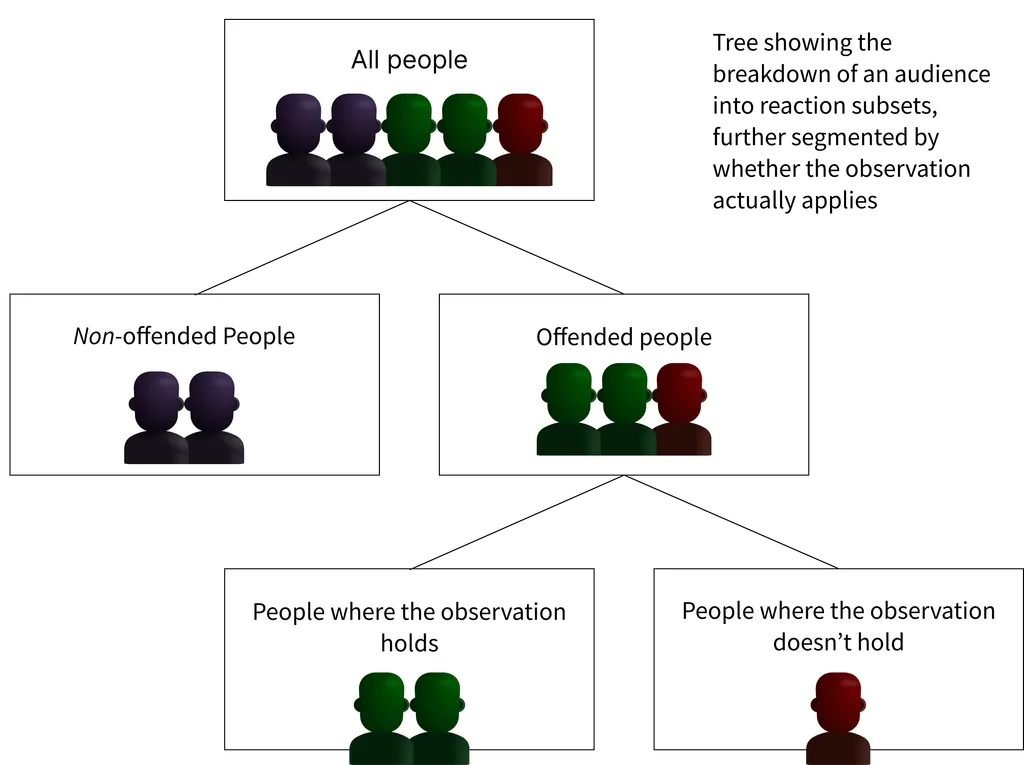
Here's the part I find interesting:
Someone from that small minority replies, explaining how the observation doesn't apply to them.
The majority, the ones it does apply to, then rally behind that reply/comment.
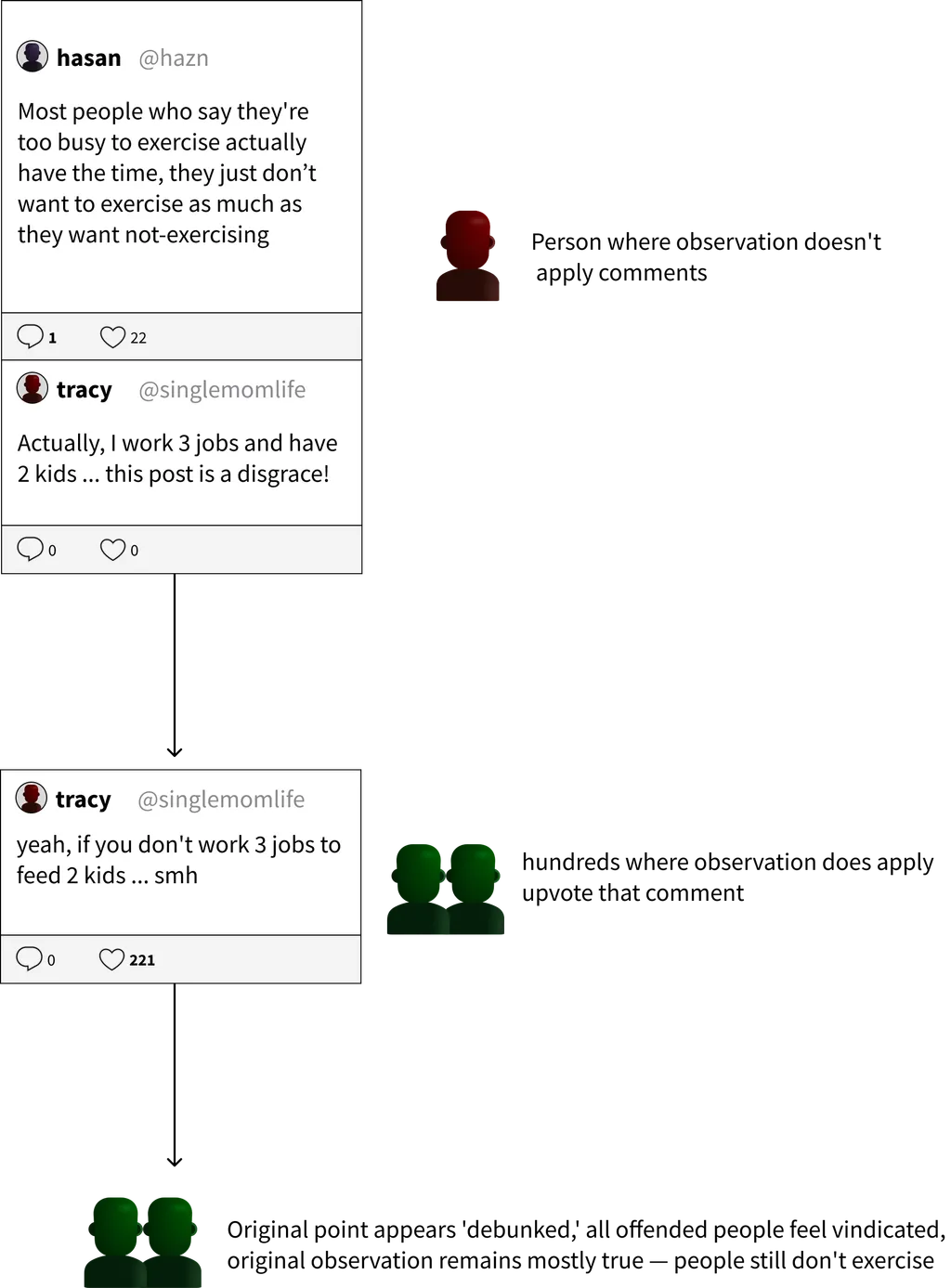
The majority latch onto the exception case that doesn't apply to them.
I call this pattern the *Exemption Outsourcing Pattern*.
A pattern where people avoid being uncomfortable by hiding behind someone else's valid exemption.
This happens because dismissing the original opinion [is cheaper](https://en.wikipedia.org/wiki/Law_of_demand) than changing behavior.
Once you zoom out a little, you notice this pattern everywhere.
[Simpson's paradox](https://en.wikipedia.org/wiki/Simpson%27s_paradox) is an example from the statistics world.
From the legal world there is the ["Hard cases make bad law"](https://en.wikipedia.org/wiki/Hard_cases_make_bad_law) concept.
----
On deathbed advice/regret
=========================
A common social media trope is [posting advice](https://www.cnbc.com/2024/09/23/regrets-people-have-at-end-of-lives-says-doctor-what-we-can-learn.html) [from people on their deathbed](https://www.reddit.com/r/Adulting/comments/1agyho8/what_do_people_regret_once_theyre_on_their_death/).
Usually about things they didn't do.
"I should've been more there for my loved ones" is a classic tune, "I should've cared less about what other people think" is another hit, usually culminating in the banger conclusion of "I should've done [a super specific personal thing like opening up a hobbyist store or buying a house in their favorite hinterland]."
I don't value this kind of advice much, it's too cheap.
Just like complaining is just so cheap.
Maybe there are good reasons at the time to not tackle the thing they are regretting, or they were too whiny in the first place to do [transformative things](/evaluating-big-life-choices).
I think that's my biggest problem with deathbed regrets, it feels like time-travelled whining about your life situation.
When chronic whiners annoy you — those who love non-stop complaining more than solving — mention that their complaint just became a top deathbed regret candidate.
Or you can be polite and internalize that you are probably gonna hear about the same person on their deathbed advising the exact opposite of what they're doing now.
That way you can be just like me and whine about other people's whining.
So yeah I don't value regrets packaged as advice, especially from people who never acted on their advice — a.k.a. people on their deathbed.
"The uncaught fish is always a big fish" is the appropriate Turkish saying^["Kaçan balık büyük olur"] that captures my mood.
Better advice comes from things people *actually did*.
This is fundamentally because [advice doesn't work that well](https://dynomight.net/advice/), but being a role model does.
Anyway, "be less on social media" is another advice/regret I am sure will be on people's lips on their deathbeds.
I'm sure because I hear it a lot.
People are aware of this regret pre-deathbed and free to act on it now.
Or they can just post on social media about deathbed regrets.
**Related**
- [The Deathbed Fallacy](https://web.archive.org/web/20241206224438/https://www.hjorthjort.xyz/2018/02/21/the-deathbed-fallacy.html)
----
Evaluating big life choices might be overrated
==============================================
*Two simple observations and my own two cents*
> Rational choice models of decision-making suggest gathering information on options and then proceeding with the option that best fits a person's current preferences and values. Paul argues that such a decision-making process is not possible for some options, called "transformative experiences", because the experience fundamentally transforms the person experiencing it. Paul offers a hypothetical example of a decision to become a vampire. Because a person would be fundamentally transformed by becoming a vampire, they cannot possibly know in advance what being a vampire is like. Other vampires might offer information, but their advice is likely shaped by their own irreversible choice. In this situation, a fully informed comparison of preferences and values is impossible.
~ [Wikipedia summary](https://en.wikipedia.org/wiki/Transformative_Experience) of L. A. Paul's "Transformative Experience"
Folks, you've heard it, evaluating too much doesn't only lead to [analysis paralysis](https://en.wikipedia.org/wiki/Analysis_paralysis), it also sometimes just isn't possible .
The question remains: why should you do something you can't evaluate?
> [Steven] Levitt invited individuals who couldn't make up their minds about matters both major (like divorce) and minor (such as changing hair color) to avail themselves of a randomized coin toss.
>
> ...
>
> Individuals whose virtual coin turned up heads were 25 percent more likely to make a change than those whose coin flip yielded tails. And, based on what they reported in two follow-up surveys over a six-month period, the nudge of a coin toss was just what these participants needed. Regardless of their responses to the coin tosses, participants who decided to make a change reported that they were substantially happier than those who did not.
~ [Summary of Working Paper 22487](https://www.nber.org/digest/oct16/change-or-not-change-just-flip-coin?page=1&perPage=50), National Bureau of Economic Research
I have never ever regretted big life choices, even if they didn't work out.
Quitting a job with no money and no backup plan taught me a ton: I improved my network, learned how to ask for favors and introductions, and started to hustle.
I learned I can go bankrupt and the value of social welfare systems.
Next month I am joining a startup with all the responsibilities I wish I had in my previous job.
Let this post be the coin flip for your life choices.
------------------------------------------------------
----
Bureaucracy enables envy, envy begets bureaucracy
=========================================================
The classic explanation of growing bureaucracy inside an organization is that the people who benefit from the processes (i.e., bureaucrats) have an interest in perpetuating the growth.
This is probably true, incentives are superpowers and all that.
I'd like to add an often neglected point to the discussion: people who don't benefit — who hate the bureaucratic processes — also push for more bureaucracy.
Here's an analogy.
During the 2008 housing crisis, many Americans were furious that their neighbors might receive mortgage relief they themselves didn't get.
[This resentment helped fuel the Tea Party movement](https://en.wikipedia.org/wiki/Tea_Party_movement#First_national_protests_and_the_birth_of_national_movement).
The same psychology applies elsewhere: "I had to work hard, why should others get [UBI](https://en.wikipedia.org/wiki/Universal_basic_income)?"
Or: "I suffered through a brutal exam, so future lawyers should too." And it applies to bureaucratic processes too.
Being denied something by bureaucracy creates a kind of mini trauma, one that resurfaces when people see others slipping through gaps the bureaucracy hasn't yet reached.
The people then pressure the powers that be to close the gap, to formalize the exception, to make others suffer the same process.
Of course, there are legitimate reasons to formalize things. But we should also admit that 'this isn't fair to the group' often masks 'this isn't fair to me'.
----
Against auto-update
=======================
People flip out over rearranged or occupied desks at work.
Someone moved their stapler, shifted their monitor, took their place, and suddenly it's a whole thing.
I, personally, can handle an occupied or rearranged desk.
I flip out over rearranged apps.
Software usually comes with the "automatic update" setting on by default.
You probably know what I'm going to advocate for.
In my opinion, this setting should almost always be turned off.
**Reasons against auto-update:**
- I don't know what changed. The "here's what's new" popup appears when I open the app to *do* something, so I immediately click the popup away. I'm more likely to actually read what's different when I consciously update.
- Many new changes aren't *really* beneficial, sometimes software just gets strictly worse and your muscle memory becomes a liability.
- Downgrading is hard, sometimes impossible — iOS for example won't let you go back.
Of course, everything is a trade-off.
One reason web applications are popular is because they basically force every user to auto-update.
**Reasons for auto-update:**
- Security updates
- The "app version not supported" screen is annoying and you might be forced to update at an inconvenient time
The security argument is strong, however, software providers pivoted to either using a different update channel for critical security fixes or they stop supporting vulnerable apps outright, which is sane behavior.
In that sense, the "app version not supported" banner might be a good thing, heh.
The tradeoff is worth it in my eyes.
Since turning auto-update off, I have more calm about my frequently-used apps and I don't flip out about someone rearranging my apps.
**Related**
- [Enshittification](https://en.wikipedia.org/wiki/Enshittification), although I am not as pessimistic as Cory Doctorow about the state of software
- ["Let that be a lesson to you, son: never upgrade."](https://www.dnalounge.com/backstage/log/2008/03/10.html)
----
Timeboxd
=========
*We fetishize time, let's put it in a nice dress*
Getting more done with less is knowing which tasks to delegate (to AI) and which tasks not to do at all.
In other words, extreme clarity on the stuff you ought to do, and extreme focus while doing it.
The most fundamental way I achieve clarity is by typing down everything, literally everything I do and think about.
That's a story for a longer post.
This post isn't about my typing tips; it's a tribute to the timebox.
And the focus you can achieve with ~dot~ it.
The gist of timeboxing is that you define a task time and set aside a limited amount of time to solve it.
Here lies the first benefit of the timebox: actually thinking through what you want to do right now, and how long it should take.
Just scribbling down things on the task at hand gets you much closer to working tidy.
There are many posts and theories about maximum timebox efficiency, but I keep it lightweight.
I use [Session](https://www.stayinsession.com) as my timeboxing app of choice^[You can simply do this with alarm clocks, or even just a watch, keep it lofi].
Mostly because when the timer for the timebox starts, there's a delightful animation to guide your breath:
I just stare at the dot and breathe, in and out.
I always go back to the dot.
Don't want to work? Go back to the dot.
Stressed? Go back to the dot.
Dot.
Wouldn't you know, staring at dot is a [quintessential meditative and concentration practice](https://www.reddit.com/r/HubermanLab/comments/1hzp5n7/has_anyone_tried_the_staring_at_a_dot_exercise/).
My tip: while breathing in, suck in the upper part of your stomach.
It automatically becomes a meditation practice and fixes your posture.
The dot clears the noise so you can actually attune.
After dotting around, I start defining the task.
The first timebox timer is for always 5 minutes long in which I fill out the following text form:.
```
- What should I be doing now?
- 🔵
- goal@🔵
- async task: 🔵
(hint: "🔵" is my way of marking text snippets as "to fill out")
```
The generation of the text form is automated.
The filling out is not.
Basically, I view it as a [Socratic monologue](https://en.wikipedia.org/wiki/Socratic_method) with myself about what is currently the highest priority.
Like, not what I think is the highest priority, but what actually is the highest priority.
Small tasks like replying to messages are done instantly.
The highest priority task crystallizes through asking and answering abstract questions, like ["is there a better way to do this?"](https://www.complexsystemspodcast.com/episodes/stacking-the-odds-cate-hall/#:~:text=practical%20strategies%20like%20asking%20%22Is%20there%20a%20better%20way%20to%20do%20this%3F%22%20ten%20times%20daily).
Having found the task, I timebox it, like `goal@8:30 - ship article`.
The `async task` field forces me to think about if I can use AI agents to aid me with the task, like doing research in parallel.
Here's a filled out example from this morning:
```
- What should I be doing now?
- Mhh, ship article? Or work on the app?
- The app can wait, article is more important as I want to write everyday
- Is there a more important task right now?
- Nope, ship article
- goal@8:30 - ship article
- async task: Claude deep research breathing techniques
```
Usually I start working on the task before the 5 minutes are up.
Then the 5 minute timer pops, I set the actual timebox for the defined goal, and keep going.
When the timer runs out I take a break.
The actual evaluation and reevaluation of the work happens after staring at the dot.
Rinse and repeat.
I follow this order religiously: breathe first, then decide what to do, then timebox.
When the timer dings, I stop.
When I don't follow the timebox and the dot, I have my least productive days.
Most online productivity articles impose too much structure for my taste.
My workflow is optimized for me, but the steps flow into each other naturally.
No predefining of timeboxes and tasks.
Just asking what I should be doing, how long it should take, and what I can skip entirely.
Over and over and over and over.
*fin*
dot
----
The vasocomputational model for meditation
========================================

> You could see meditation as mental stretching: standard intellectual skills are like training for grip strength, you get better at grasping concepts, but worse at letting them go
>
> This is not just a metaphor, according to [@johnsonmxe](https://x.com/johnsonmxe)'s theory of vasocomputation, we freeze neural patterns (concepts) by constricting the smooth muscles of our blood vessels (grip), we are literally grasping concepts with tiny muscles, and if we don't stretch and move enough, we lose flexibility and agility, same as with the musculoskeletal system
>
> ...
>
> I've tried to illustrate the stretching/relaxation process in the diagram [above]:
> - The picture of the cat at the top represents input from our sensory system
> - The triangular network represents our neurovascular system filtering that input so we can fit it into conscious awareness, it's a dynamic information filter
> - As blood vessels progressively release their grip on neural patterns (left to right), awareness becomes more dynamic and gets more information from deeper (less abstract) layers of the network
> - At the bottom I've tried to show the qualitative effects of this: experience feels deeper and richer (indicated by the height of the chunks of perception) and time appears to expand (we can only perceive time by observing change, so a more dynamic awareness creates more distinct "moments" in time)
~ [Hinterlander](https://x.com/yoltartar/status/1887930438322405402)
A useful model of combining common experience, psychedelic experience, and insights from deep neural networks.
In fact, it's crazy how much the [above] diagram reminds me of the 101 explainer of how [deep convolutional neural networks](https://en.wikipedia.org/wiki/Convolutional_neural_network) (CNNs) work:

Yes, my dear reader, you noticed something -- convolutional neural networks do vasocomputation as well!
Or rather, in the vasocomputation model, we "stretch" *the* natural neural network, our brain, to be aware of earlier stages of our information processing.
Is this finding genuine [consilience](https://en.wikipedia.org/wiki/Consilience)?
Anyway, as with any model, the goal is to create better questions and models, not to arrive at an answer.
----
Munger and Godbolt rules for explaining the world
====================

> You can never make any explanation that can be made in a more fundamental way in any other way than the most fundamental way.
> ...
> You've got to know all the big ideas in all the disciplines more fundamental than your own
~ [Charlie Munger](https://www.stripe.press/poor-charlies-almanack/book#:~:text=You've%20got%20to%20know%20all%20the%20big%20ideas%20in%20all%20the%20disciplines%20more%20fundamental%20than%20your%20own), Poor Charlie's Almanack book
In the book, Charlie uses insights from psychology to explain how one casino slot machine can be made more popular: you leave the "misses" rate fixed, but increase the amount of ["near misses"](https://en.wikipedia.org/wiki/Near-miss_effect) of the slot machines.
"Ah, just a single cherry was missing for the jackpot" and so on.
Crude microeconomic models would predict all slot machines to have the same popularity, as all slot machines have the same amount of "misses", therefore the same expected economic value.
Charlie, however, considers psychology to be more fundamental than microeconomics.
Munger's rule has explanatory power bottom up - start from the fundamental disciplines and build up.
In complex systems such as software, a different rule might have better explanatory power.
Program code is built like a cake with layer upon layer upon layer of abstractions and concepts.
The problem to be solved or explained is not always at the most fundamental layer.
In these cases, it can make sense to purchase explanatory power by working top-down:
> You should know your layer well, but you should also know one layer below it a little bit, and you definitely need to know the shape of the layer that's beneath that.
~ [Godbolt's rule](https://corecursive.com/godbolt-rule-matt-godbolt#:~:text=You%20should%20know%20your%20layer%20well%2C%20but%20you%20should%20also%20know%20one%20layer%20below%20it%20a%20little%20bit%2C%20and%20you%20definitely%20need%20to%20know%20the%20shape%20of%20the%20layer%20that's%20beneath%20that)
----
In defense of autism
====================
> It is hardly possible to overrate the value, in the present low state of human improvement, of placing human beings in contact with persons dissimilar to themselves, and with modes of thought and action unlike those with which they are familiar.
~ [John Stuart Mill](https://www.econlib.org/library/Mill/mlP.html?chapter_num=49#:~:text=It%20is%20hardly%20possible%20to%20overrate%20the%20value)
Autistic people are easily accused of lacking empathy, and in some deeper, indirect ways, lacking humanity.
Really, few online peeps bother demonstrating empathy and gratitude themselves.
When thinking about autism, I try to keep one thing front and center:
- Autistic people are humans, deserving of dignity
Other considerations when thinking about autism^[With the caveat that you should read "autistic people are" as "autistic people are statistically more prone to be"]:
- Autistic people are treated as outsiders, making them less likely to believe society's stories around race, nationality, etc.
- Autistic people are killing it in our most innovative sectors
- Autistic people are underdog scientists, more likely to follow low-status, high-impact ideas
- Because LLMs are literal and information-dense, autistic people are better at steering AI
- Autistic people are the creators of my favorite tools
Hard for me to not have gratitude for the autistic community.
**Related:**
- [Tyler Cowen on Economics and Autism](https://www.youtube.com/watch?v=B6rd1qLgdA4)
- [Peter Thiel: Asperger's Is an Advantage](https://www.businessinsider.com/peter-thiel-aspergers-is-an-advantage-2015-4)
----
A simple definition of simple
=============================
> My life changed when I learned what simple really means. Simple comes from simplex. The opposite of complex. Complex comes from complex, the verb that means to intertwine.
>
> This is important. Remember this, dear listener, your life is complex when it is intertwined with dependencies. You are depending on things and things are depending on you. Your life is simple when it is not complex.
~ [Derek Sivers](https://tim.blog/2025/11/28/how-to-simplify-your-life-transcript/#:~:text=My%20life%20changed%20when%20I%20learned%20what%20simple%20really%20means.%20Simple%20comes%20from%20simplex.%20The%20opposite%20of%20complex.%20Complex%20comes%20from%20complex%2C%20the%20verb%20that%20means%20to%20intertwine)
**Related**
- ["Simple Made Easy" - Rich Hickey](https://www.youtube.com/watch?v=SxdOUGdseq4)
- [Do the simplest thing that could possibly work](https://www.seangoedecke.com/the-simplest-thing-that-could-possibly-work/)
----
# Assumptions in apps
*Let me decide what's best for me*
## I

Oh, best podcasts of 2025 list in my Apple Podcasts app?
Great!
Let's see if I can find some great new things from the vast world of podcasts.

Oh, they are all from Germany!
The idealist and cosmopolite I am, I expected podcasts from all around the world under the "best podcasts" section.
At least English speaking podcasts, given the English title of the campaign.
Of course, when I've originally opened my App Store account, I've set the region to Germany and that's why Apple shows me German podcasts.
I don't live in Germany anymore.
Even worse in some sense, I am not listening to German-speaking podcasts at all.
## II
Starting in late 2024, I noticed ChatGPT and Claude subtly changed their behaviors.
I had a hunch they knew the physical location I am prompting from.
[This hunch turned out to be true](https://simonwillison.net/2024/Nov/4/chatgpt-location/).
I consider the steering of LLMs the most crucial skill for white-collar workers.
Providing information, or rather, assumptions automatically to the LLM is like a backseat driver who grabs the steering wheel and yanks it left, assuming you wanted to turn that way.
Okay, I might've gone too far with the analogy there.
Though, the fact that I could feel a vibe shift in the answers I got is enough reason for me to be ticked off by this.
I am aware that 2025 LLMs have a slight American and liberal bent by default.
I consider this a feature, not a bug.
Knowing the default behavior, its vanilla vibe, is a crucial part effective coworking with LLMs.
## III
ChatGPT and Claude have a "memory" feature, which automatically provides the LLM information from previous chats.
This feature also changes the vibe of the answers you get back.
I have no qualms with the feature though, as you can just turn it off, to get back to the default behavior.
----
# Underrated reasons to be grateful: podcasts
1. That "subscribe wherever you get your podcasts" is a miracle
1. That, because Plato was: [fuckin jacked](https://en.wikipedia.org/wiki/Plato#Life), [a MMA commentator](https://en.wikipedia.org/wiki/Pankration#Identifying_and_exploiting_the_weak_side_of_the_opponent), [taking psychedelics](https://becomingintegral.wordpress.com/2013/09/19/was-plato-on-drugs/), into [stoner theories](https://en.wikipedia.org/wiki/Allegory_of_the_cave) and [learning by asking questions](https://en.wikipedia.org/wiki/Socratic_dialogue), it means the most popular podcast host is closer to Plato than we appreciate
1. That looks matter less
1. That while people play status games about what they read and watch, few people play status games about which podcasts they listen to
1. That the popularity of non-dubbed American podcasts are incentivizing more people to learn English, pushing humans closer to one universal human language
1. That Bill Burr's [Shari's Berries](https://www.youtube.com/watch?v=Rl5JDzvkEA0) moment exists
1. That if it's true that speech is what really set mankind apart, then it is likely that podcasts might be Homo sapiens most unique art form
1. That podcasts are an art form, and that both highly produced podcasts and lofi podcasts are listened to in equal measure
1. That podcasts and their respective audience comments are hard to find, we are less captured by groupthink around podcasts
1. That it's truly keeping oral culture alive
1. That podcast interviews are distinctively different from radio interviews, as radio hosts are more likely to try to make their guest appear dumb, while podcast hosts are more likely to try to make their guest appear smart
1. That we have a more authentic conversation medium than TV and radio
1. That it proved the world that Mike Tyson is truly the [warrior philosopher of our time](https://www.youtube.com/watch?v=gRI_fabKOZQ), he would've killed it in the Roman Empire
Inspired by Thanksgiving and [Dynomight](https://dynomight.net/thanks-5/).
----
# Sigal Samuel on Indra's net

[Sigal Samuel](https://x.com/SigalSamuel) making some great observations about boundary setting culture:
> ... some people bastardize the concept of boundaries by brandishing boundary language as a cover for avoidance. We've all got that friend (or Instagram influencer) who says, "Nope, I'm drawing a boundary!" anytime they're being asked to do something that would be even a little hard or uncomfortable.
This likely occurs when a person hasn't set their boundaries once, and has been burned for that mistake.
Now it's become a mini [avoidance response](https://en.wikipedia.org/wiki/Avoidance_response), it's easy to overindex on mistakes by overly correcting behaviour.
> So allow me to present Indra's net, a classic Buddhist metaphor that originated in ancient India.
>
> Picture an infinite net stretching out across the universe (a bit like a spiderweb). At each node where the threads intersect, there's a jewel (a bit like a dewdrop that sits on the spiderweb). And each jewel is so shiny and reflective that it contains the image of every other jewel in the entire net. Which means each jewel also contains the reflections of the reflections, and the reflections of those reflections, on and on forever.
Sigal goes deeper into the metaphor, focusing on the fact that we are dependent on each others lights and reflections:
> Feeling fear and resentment while offering "charity" or "service" or "help" to others is not actually being in right relation with others — it's an all-too-common form of martyrdom that sets up a hierarchical dynamic between a long-suffering "giver" and a passive "receiver." The alternative is to stay horizontal, to think "I'm a jewel in the net, you're a jewel in the net, and I'll offer whatever I can offer without damaging my well-being — without ripping my part of the net."
>
> So, dear reader, play with finding that balance. You'll know you've found it when you don't feel resentful — you just feel tightly connected to others, and gleaming.
Original Vox advice column [here](https://www.vox.com/the-highlight/466054/boundaries-psychology-self-care-burnout), archived version [here](https://archive.is/N2f2Q).
I believe deeply that people can improve their wellbeing.
Usually not with strict systems or elaborate frameworks, but rather a dance and confrontation with reality.
**Related:**
- [Ruminating on read receipts](/read-receipts)
----
Ruminating on read receipts
===========================
*Why the two ticks mean so much*
One obsession of mine is tracking which communication styles only work when texting, and which ones only work face-to-face.
One obvious difference is expected responsiveness: texting is inherently asynchronous.
There are many settings which you can tune on your texting app of choice^[Tuning your face, in the non-plastic surgery sense, is a crucial skill. You can go far by just listening and having an understanding face expression. Also looking people in their eyes.].
Out of all the settings, I will argue that having read receipts on or off is the most impactful decision for your social life.
I have always left read receipts on and I have always responded to texts instantly.
This is a conscious decision, I believe your personality shines through the most when you don't overthink your messages.
If I want to date the person I am texting with, *I lean into this more*, to signal who I am and that I am not playing communication games.
Establishing this trust in your texting style and personality benefits everyone who texts you in the long run.
I've noticed the most unresponsive people usually have read receipts off.
My friends know I am responsive.
I can see the case for turning read receipts off, though.
People like the freedom to read a message and respond at a time that fits them.
It can also be a status and image thing, people might want to be considered busy^[For any social interaction, status factors are always there. Dismissing status factors as a weak argument is not acknowledging reality].
Privacy considerations are similar to the freedom argument, but might be rooted in difficult circumstances the person finds themselves in, like texting with mentally ill people.
Basically, these are all arguments for people reading something and not responding, which is why read receipts have a bigger effect on the person reading than the person sending.
Except in psychopath ex or dysfunctional family circumstances, I believe turning off read receipts does a person more harm than good.
Or said differently, you can improve your personality by just turning read receipts on.
You free yourself from what I like to call the "plausible deniability lifestyle".
You can see this lifestyle everywhere, delivery drivers eating some of your ordered fries, masking passive aggressive comments, reading a message but not sending read receipts.
You probably caught on, my point is not about fries or read receipts.
It's about how many tiny ways we've found to avoid being fully honest, fully present, or fully accountable.
The simple act of turning read receipts on and responding instantly is a big rebellion against all the mini-rebellions of plausible deniability.
Fully engage with life, leave your read receipts on.
----
The allure and failure of knowledge graphs
================================================

[Knowledge graphs](https://en.wikipedia.org/wiki/Knowledge_graph) are one of the sexiest sounding methods in theory.
Scientist and engineer types are attracted to codifying knowledge in an abstract, syntactically perfect way.
The history is full of [big projects](https://en.wikipedia.org/wiki/Semantic_Web) trying to bridge the gap between the perfectly syntactic knowledge graph world and the mushy semantic world.
They all failed so far.
The newest revival of knowledge graphism is [combining the knowledge graphs with LLMs](https://www.youtube.com/watch?v=OxzUjpihIH4).
Go through the comments, people are again attracted by the idea of abstracted, perfected knowledge.
I believe this concept finds resonance because interacting with LLMs is inherently mushy.
However, modern LLMs should be seen as more efficient knowledge graphs (efficient in the economic sense of the word^[Claude Opus 4.5's take:
Software efficiency from a buyer's perspective
Efficiency in software services boils down to value per unit of cost. Here's how to evaluate it:
1. Total cost of ownership (TCO)
Not just the subscription price, but also: implementation time, training, integration costs, and ongoing maintenance. A cheaper tool that needs constant workarounds is less efficient.
2. Time to value
How quickly does the service deliver results? A service that saves 10 hours/week but takes 6 months to deploy may be less efficient than one saving 5 hours/week but operational in 2 days.
3. Resource utilization
Does Service A require 3 employees to manage while Service B runs autonomously? The labor overhead directly impacts efficiency.
4. Output per dollar
Compare: transactions processed, users served, or tasks completed relative to cost. Service A at $500/month handling 10,000 requests is more efficient than Service B at $300/month handling 5,000.
5. Opportunity cost
Choosing a less capable service means lost productivity, slower scaling, or missed features that competitors leverage.
The core equation:
Efficiency = (Business Value Delivered) / (Total Resources Invested)
A buyer should pick the service where marginal cost yields the highest marginal return, factoring in both direct expenses and indirect costs like time, complexity, and scalability limits.]).
LLMs with agentic capabilities are even more efficient!
LLM results are not as satisfying as syntactically and deterministically querying a knowledge graph, however.
The biggest knowledge graph user, Google, is pivoting to enhancing their results with [AI Overviews](https://blog.google/products/search/generative-ai-google-search-may-2024/).
Funnily enough, Google itself is sneak dissing the usefulness of knowledge graphs in the linked PR statement:
> We've meticulously honed our core information quality systems to help you find the best of what's on the web. And we've built a knowledge base of billions of facts about people, places and things — all so you can get information you can trust in the blink of an eye.
>
> Now, with generative AI, Search can do more than you ever imagined. So you can ask whatever's on your mind or whatever you need to get done — from researching to planning to brainstorming — and Google will take care of the legwork.
People love to post examples of bad AI Overviews, but whenever I look over the shoulder of my friends, most of their Google queries are answered by the AI Overviews section.
I believe knowledge graphs work best when you can codify your knowledge as honest-to-god facts.
Facts that have the least possible amount of interpretation potential, the least amount of semantics.
LLMs just capture semantics better, or worded differently, capture the context of the query better.
As dissatisfying as the realization is, the real world is mushy and big, and thus can currently only be captured by mushy and big models.
**Related ideas:**
- [Claudius on why the semantic web failed](/quoting-claudius)
- [The bitter lesson](http://www.incompleteideas.net/IncIdeas/BitterLesson.html)
- [Context is that which is scarce](https://infovores.substack.com/p/context-is-that-which-is-scarce)
----
The case for preserving case
============================
*A short story of going against your elders, while being accepting of their ways*

What happens when you try to drag-n-drop the `draft.docx` into a directory containing a `DRAFT.docx` file in macOS?

You get an alert!
This is because macOS is case-insensitive, it considers `draft.docx` and `DRAFT.docx` to be the same filename.
It's all lowercase in the eyes of my MacBook.
Also in the eyes of most humans, it's easy to follow why you don't want to allow `draft.docx` and `DRAFT.docx` to be in the same directory.
Treating everything as lowercase is efficient because it simplifies many, many, computer operations^[That's one meta-reason I write in all lowercase as well, I differentiate less, leading me to type faster, type more].
However, case contains information, and we don't want to lose that information, we all know the difference between `draft_final.docx` and `FINAL_draft_final.docx`.
The good news here is that macOS is also case-preserving, meaning you can have your `FINAL` cake and eat it too!
Because computer programmers are binary thinkers, many systems are not designed this way.
Most case-insensitive file systems are not case-preserving, and most case-preserving systems are case-sensitive.
The legendary UNIX system - the ancestral grandparent of macOS - for example, differentiates between `draft.docx` and `DRAFT.docx`, and allows both files to be in the same directory^[See Wikipedia].
macOS inherited the UNIX differentiation between `draft.docx` and `DRAFT.docx` in terms of displayed filename, but is wise enough to simplify by treating the names as equal for actual operations.
The best behaviour in my eyes.
Like in many other design decisions, macOS hits the sweet spot of "intuitive but opinionated", while still being accepting and preserving other kinds of workflows.
We should all be more like macOS, opinionated, but preserving original meaning.
----
# My personal, stubborn attachments

## I
Tyler Cowen's book [Stubborn Attachments](https://marginalrevolution.com/marginalrevolution/2018/08/preface-stubborn-attachments-book-especially-important.html) lays out "a vision for a society of free, prosperous, and responsible individuals".
The book makes surprisingly simple claims: you can achieve prosperity for the whole world if you are stubbornly attached to two principles:
- Economic growth
- Basic human rights
As I said, this sounds simple to the point of it being redundant right? Almost no one argues for the opposite, so why even argue for these principles?
But Tyler doubles down on these stubborn attachments in the book, hammering the point home that economic growth is *the* moral imperative.
Everything worthwhile is downstream and emerging from economic growth.
It's imperative because economic growth inevitably leads to a better world, or growth is our best shot at a better world.
A world where wellbeing is improved for everyone, no matter how you want to measure wellbeing.
The points he makes in the book are plentiful, philosophical and practical. A short read, I'd recommend it to everyone - especially the content around the book, like Tyler Cowen himself [dismantling the arguments of the book](https://www.youtube.com/watch?v=EO5jJFpbJvg).
## II
The kind of growth I am interested in is personal growth.
Being keen to religious reasoning, I consider personal growth a moral imperative.
Inspired by Tyler Cowen, the question becomes: how can I formulate my stubborn attachments so that personal prosperity becomes inevitable?
Of course, I could simply have two bullet point list as well, like "personal growth" and "mood maintenance".
But that's boring.
Not being bound by having to define a set of principles for the entire world, let me be specific about *my personal stubborn attachments:*
- Go to sleep early
- Ship something creative everyday
- Rewrite something every day
- Write out the question and answer to "what should I be doing right now" constantly
- Never make something you tell the world become a lie
- Whenever you think well of someone, immediately tell them (whether through text or thanks, never in thoughts)
- Don't take any form of drugs^[Like the rest of the prose, this is drugs written with a lowercase d, meaning caffeine and alcohol also count as drugs. I follow this religiously, with the sole exception of sugar in the weekend]
- [Never wish for less time](https://dailydad.com/never-wish-for-less-time/)
- When falling short, simply atone for your mistakes by being stubbornly attached again
## III
While the book's arguments are made through a secular and global lens, the underlying theme of the arguments are religious and American.
In fact, Tyler Cowen's own Straussian reading^[Straussian reading is a meme from the Cowenverse, it's basically a between the lines reading of what the author really meant, see Wikipedia] of the book is a defense of Mormonism and American exceptionalism: the optimism baked into the book, the faith in compounding growth, that the future will be better than the past, that actions matter in cosmological timescales.
Fittingly, Tyler considers Mormonism the most American religion.
What are your secularly-defined-but-actually-borderline-religious attachments?
----
Don't make me wait
====================
It's 2025, after signing up for an app or website with your e-mail address, you wait to receive the "verify your account" message in your e-mail inbox.
You keep refreshing your inbox, the message arrives about two minutes later.
Why is this not instant?
An easy case to make for why it should be instant comes from the world of e-commerce.
We know that even milliseconds of delay in your software lower customer retention and satisfaction, thus lowering company revenue.
What makes the waiting-for-confirmation-mail problem even weirder is the fact that software companies invest heavily in generating new user sign-ups.
Okay, I want to make a second point, not from the world of e-commerce, but from the world of ancient, old school commerce: banking. Banks understand that the most valuable customer behavior (opening a new account) deserves massive optimization, even when it seems inefficient:
> Banks have extremely weird behaviors by the standards of parking engineers; the typical user behavior is to stop in for only a few minutes but the behavior the bank wants to optimize for, new account opening, can take half an hour to several hours. Through what turns out to be a simple result of queuing theory, bank branches end up with a lot of parking that appears mostly underutilized almost all of the time, and this is close to optimal.
Excerpt from the excellent [patio11](https://www.bitsaboutmoney.com/archive/why-is-that-bank-branch-there/) article.
Okay, I hope to have made my case of why it should be instant.
Now the question remains why clearly companies don't care about making it instant.
I remember back in 2005, 20 years ago, being annoyed by this.
Maybe it is like daylight saving time?
Everyone hates the thing, and clearly we should do better here, but since it's a once and done thing people don't complain long enough for the problem to be fixed?
Maybe we rely on the "stay signed in" button too much?
I don't know.
Anyway, to all people designing an e-mail confirmation service, please speed it up.
Don't make me wait.
----
Killing your darlings
=====================
> Our second biggest cost is taxes, and our biggest cost is opportunity cost.
~ [Attributed to Larry Page](https://www.dwarkesh.com/p/jeff-dean-and-noam-shazeer)
Larry Page and Noam Shazeer both obsess over opportunity cost. It's the cost that matters most when evaluating policies, personal or public ones.
Here's the problem: opportunity cost is invisible. The counterfactual, by definition, doesn't exist, so you never see it. Kahneman calls this ["what you see is all there is"](https://en.wikipedia.org/wiki/Thinking,_Fast_and_Slow#Optimism_and_loss_aversion).
A solution to this ocular blind spot in your personal life is deciding against doing the thing *you really want* to do.
You kill your darling.
You will be super conscious of what you left on the table, the counterfactual becomes clear, and you actually take all the other options more seriously.
----
Starting Sabbath
=================
Usually after the 6th day of consecutive work, I feel drained.
I hate the feeling of being drained and what it does to me: stay in bed longer, watching YouTube videos.
It just becomes easier to tell myself that I deserve this cheap form of rest.
Ironically, being drained has a negative effect on my sleep time and quality, as I fall into bad, lazy patterns.
So instead of staying in bed and complaining, let's do something against the draining downward spiral: I'll take a page out of the Jewish book and adopt ancient deliberate decompression: Sabbath.
Keep it simple: starting with the Friday communal prayer at noon, I'll intentionally only do things that give me energy:
- Meditating
- Taking walks
- Drawing
- Reading up on new tech
- Programming hobby projects
- Household chores
- Meeting friends
- Cooking
- Stretching/yoga
And for everything else: just don't do it.
----
> I worked for more than 30 years on these systems and they could never work. I implemented a very fast NLP symbolic parser, for which the team I worked with created grammars for 8 languages, including Japanese. In 2007, with a grammar of 60,000 rules, we could parse at a speed of 3000 words/s (see https://github.com/clauderouxster/XIP for the Open Source version). The parser could extract syntactic dependencies, and could use ontologies. But language is like sand, the more you try to grab, the more you leak. There was a kind of futility in trying to compress languages into rules, nothing actually scaled up. Still, we managed to win competitions as late as 2016 with SemEval sentiment analysis, and in 2017, we also ranked first in a legal document extraction campaign organized by IBM, but to no avail. It was a lot of work, and the conclusion was very simple. We had to push our grammars as far as possible into lexical grammars, which eventually LMM managed to really implement. We discovered very early, that context was all that mattered. We tried to create grammars that would apply to a full paragraph instead of sentences, but then the performance would plummet. The reason why LLM work, is that at each step they compress the whole context into a meaningful vector, which they then used to guide the rest of the generation process. I spent my whole life in the pursuit of a perfect parser with very brillant people, and I really find hard to say that not only did we fail, but that LLM is the response we were looking for.
~ [Claudius](https://lobste.rs/s/y6e06t/ai_is_impressive_because_we_ve_failed_at#c_tot1rn)
----
# Getting used to it
Is underrated.
Don't like it, but it's useful enough to do it? Just get used to it.
More on this: [You Can Try to Like Stuff](https://dynomight.net/liking/) by Dynomight
----
# Never record a meeting
Always transcribe it by hand.
People act differently when they know they are being recorded.
For me, this is the main reason I am against recording.
I want to hear people's genuine and slightly unfiltered takes.
Producing an artifact is one way to make meetings more effective, though.
Therefore, just transcribe the meeting by typing it all out on the meeting screen for everyone to see.
That's the sweet spot.
**Pre-LLM list of arguments:**
- People know exactly what you are writing, thus are more trusting
- People can opt-out of being transcribed
- It keeps you engaged in the meeting as you really have to listen
- You can slow/speed up the convo with an excuse that you need some typing, you can ask clarifying questions -- you are much in control of the meeting
**Post-LLM list of arguments:**
- Hand transcriptions are better than machine generated ones when the meeting has many people, many topics, a mix of (non-English) languages and subpar audio quality
- It keeps your typing skills sharp, a crucial skill for working with the LLMs
- Humans are more likely to read writing that's not produced by LLMs, rational or not