The Exemption Outsourcing Pattern
Two observations about how people interact with differing opinions they encounter:
- it’s easy to mistake someone else’s opinion for an attack on identity
- people rarely agree with things that feel like an attack on their identity
Pick a subject, nearly any subject, and there will be people flipping out about differing opinions. Nothing new here, no need to elaborate.
What I find interesting is one subtle way this plays out online. A subtle enough pattern that it’s worth talking about. Let me illustrate the pattern with an example, starting with a person posting their opinion/observation online:
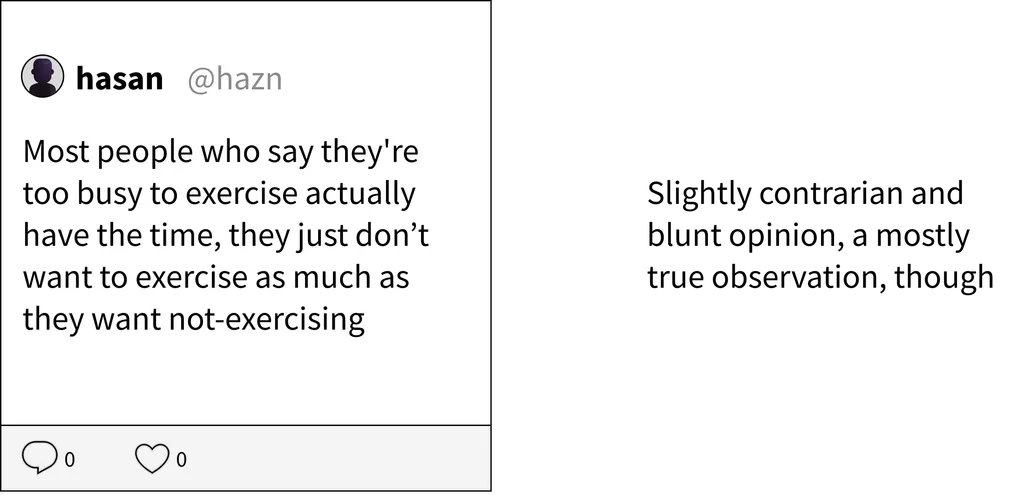
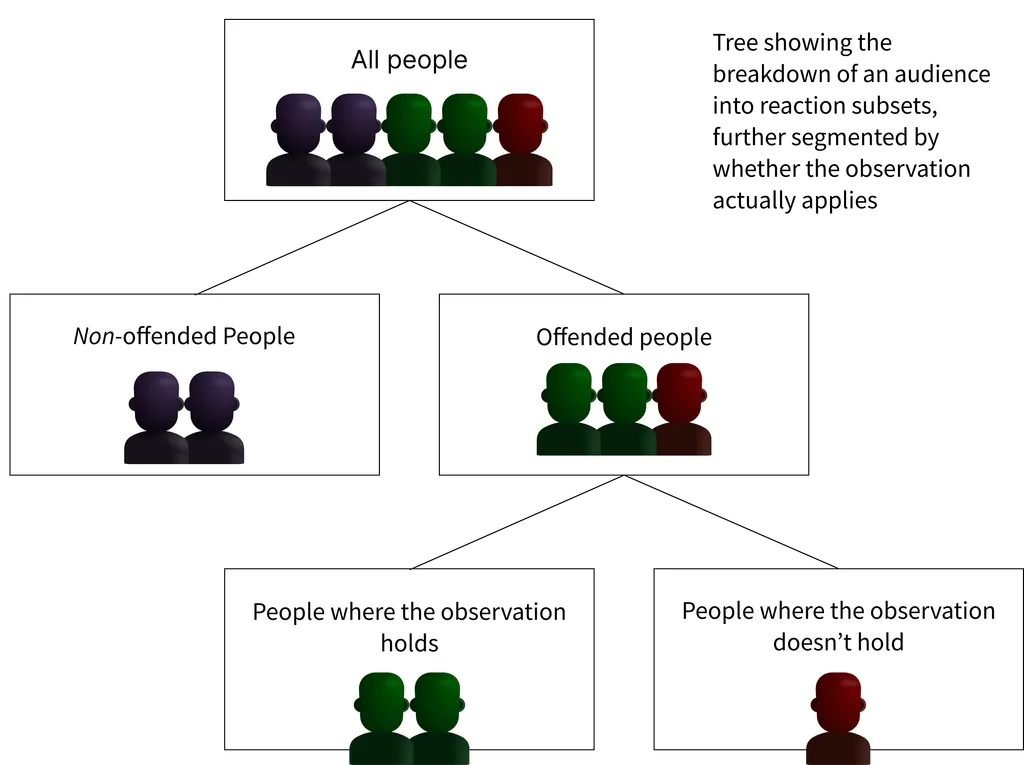
When people encounter something like this, a fork happens: some get offended, some don’t. Most non-offended people agree with the opinion or simply scroll past. It’s the offended people who are more likely to engage with the post. The offended can be split into two groups again:
Here’s the part I find interesting: Someone from that small minority replies, explaining how the observation doesn’t apply to them. The majority, the ones it does apply to, then rally behind that reply/comment.
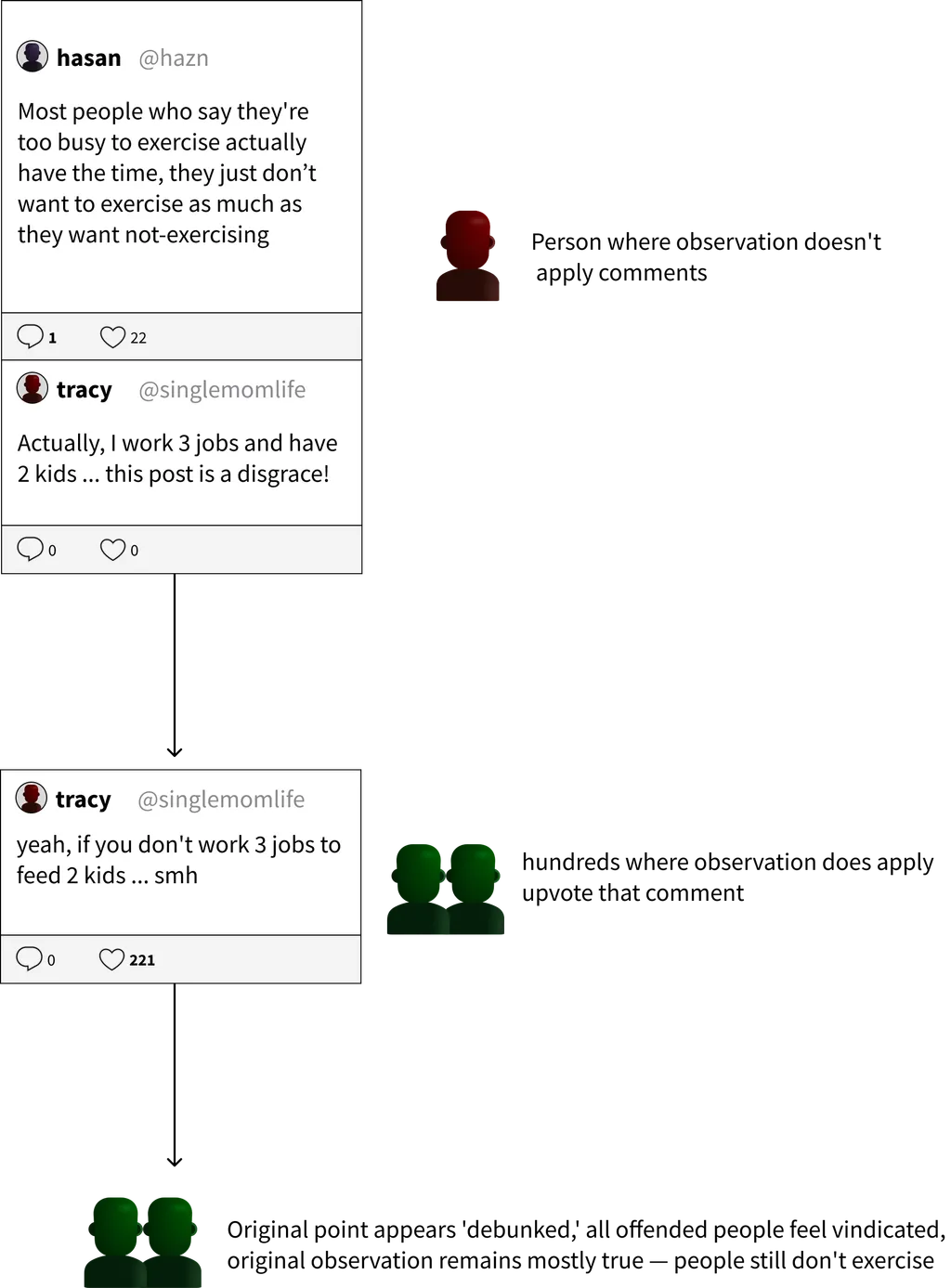
The majority latch onto the exception case that doesn’t apply to them. I call this pattern the Exemption Outsourcing Pattern. A pattern where people avoid being uncomfortable by hiding behind someone else’s valid exemption. This happens because dismissing the original opinion is cheaper than changing behavior.
Once you zoom out a little, you notice this pattern everywhere. Simpson’s paradox is an example from the statistics world. From the legal world there is the “Hard cases make bad law” concept.